


Publisher monetisation is not simply plugging remnant traffic into an ad network. Inventory type, user context, data availability, price floors, buyer relationships and sales teams all affect final revenue. PubMatic provides infrastructure around those variables.
It owns neither content nor users. Instead, it uses technology, data and transaction connections to improve programmatic yield. PubMatic should be understood through the publisher's supply operations, not as another ad network.
1. An SSP is revenue infrastructure, not a middleman
A mature sell-side platform handles at least four jobs: inventory access and segmentation; connecting demand and bidding; passing data and identity signals; and governing transaction and price rules. Weakness in any area costs either revenue or user experience.
PubMatic combines these into an operating system. Publishers can apply different commercial paths by content, geography and user context instead of treating every impression as the same price pool.
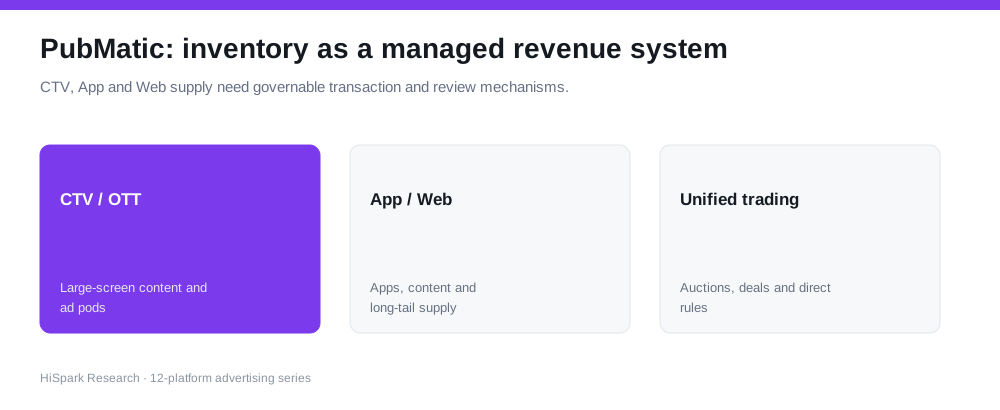
2. CTV and Apps are different problems
CTV prioritises large-screen experience, content context, ad pods and brand safety. Apps prioritise SDKs, events, privacy consent, reward environments and retention. Both can be programmatic, but their supply structures and operating rhythms differ.
Publishers should not only ask whether a platform supports CTV or apps. They should ask whether it can deliver reliable demand, workable identity and measurement, and deal structures that do not damage user experience in that environment.
3. Yield optimisation is more than raising floors
Yield optimisation is often reduced to raising price floors. Sustainable improvement comes from better demand matching and transaction certainty. A high floor that destroys fill may reduce total revenue.
A more balanced scorecard includes net fill, effective CPM, bid depth, ad experience, repeat advertiser share and contribution by transaction path. A platform like PubMatic creates value only when it improves this system over time.

4. Readiness checks before integration
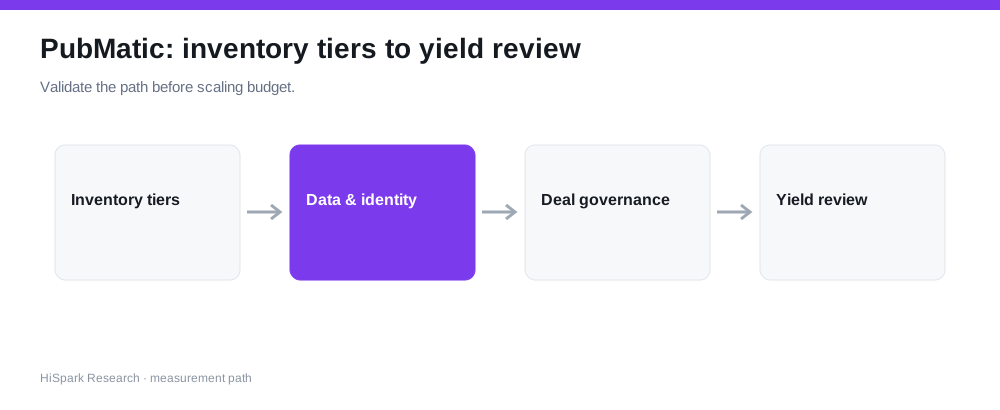
Start with inventory hygiene: identify which contexts can be monetised without damaging reading, viewing or app experience. Then map data and privacy permissions. Finally, define deal governance: who controls floors, priority and inventory release.
If PubMatic is treated as merely another source of demand, upside is limited. The real opportunity is a supply-operating upgrade: explainable inventory, controllable data, manageable deals and reviewable outcomes.
5. Put it back into the value chain: five roles are not interchangeable
PubMatic belongs to SSP & Marketplace. A common mistake is to judge it with metrics owned by another role: demanding DSP-style ROAS from an SSP, or judging an ad server by network fill, produces distorted conclusions.
The better question is which core resource it controls, and whether that resource converts into a verifiable business outcome. For Independent sell-side platform and yield optimisation, scale is not the only answer; transaction quality, data availability and governance matter equally.
Establish the business type and readiness conditions before discussing integration or optimisation. Applying one KPI across every role often turns an organisational issue into a false platform issue.
| Industry role | Core resource controlled | Question to validate |
|---|---|---|
| DSP / demand platform | Budget, audiences and optimisation goals | Can it buy the right audience at a controllable cost? |
| Commerce media | Product data, shopping intent and retail/offsite context | Do product, data and media create incrementality? |
| Native / discovery network | Publisher context, content consumption and next-click attention | Can content turn clicks into valuable actions? |
| SSP / sell-side platform THIS PLATFORM | Inventory, auction paths, signals and deal rules | Can it improve net yield while protecting experience? |
| Omnichannel ad platform | Identity, content context, DSP and multi-screen supply | Can it unify identity, frequency, creative and measurement? |
Quick fit check: who is ready and who should build foundations first
| Business type | Best-fit context | Readiness required | Avoid when |
|---|---|---|---|
| Content publisher | Stable traffic but manual revenue management | Inventory tiers, permissions and floor rules | Adding slots without regard to experience |
| App developer | Needs more programmatic demand and fill | SDK governance, privacy and retention monitoring | Raising impressions at the expense of experience |
| CTV publisher | Builds controlled programmatic CTV revenue | Ad-pod, frequency and brand-safety systems | Treating all supply as open-auction inventory |
Platform reference: PubMatic