

Product fit cases and pilot
Put OPPO Ads into an operating context: who fits, when to be cautious, and how to validate the first pilot.
OPPO Ads fits teams with stable users and repeatable usage moments and a real need to improve OPPO终端流量与应用分发.
Do not scale OPPO Ads when post-click outcomes are unexplained or platform-reported metrics are the only evidence.
Start with one market or product version and validate valid installs, retention, ARPDAU and source quality before expanding.


OPPO has a meaningful handset base in several emerging markets. App markets, browsers, content services and system entry points create commercial attention beyond conventional ad networks.
Device channels require a different evaluation lens. Download, install, activation, registration and retention happen at different stages, while store operations and compatibility shape outcomes.
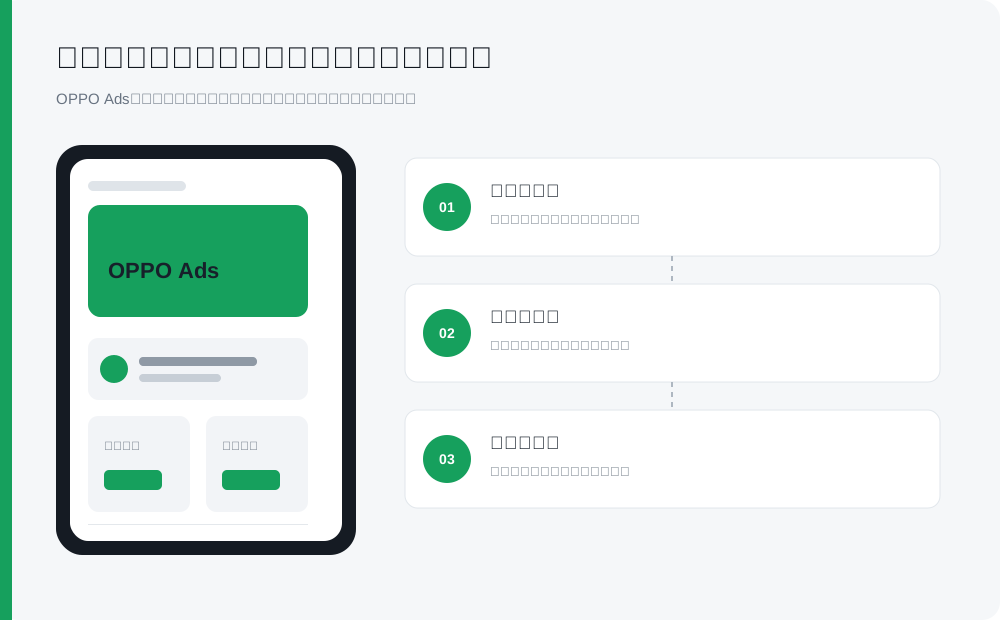
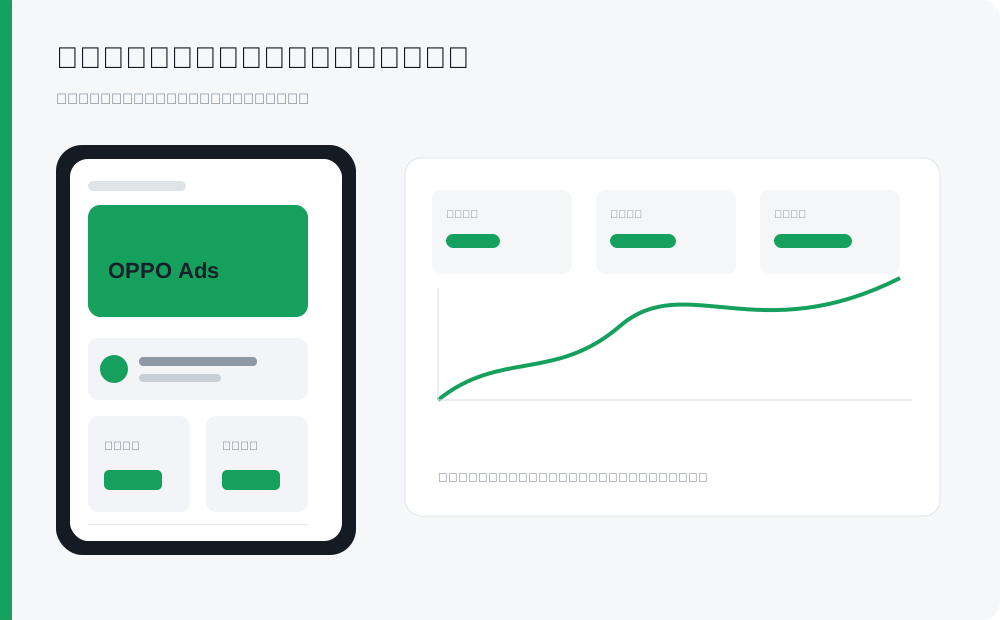
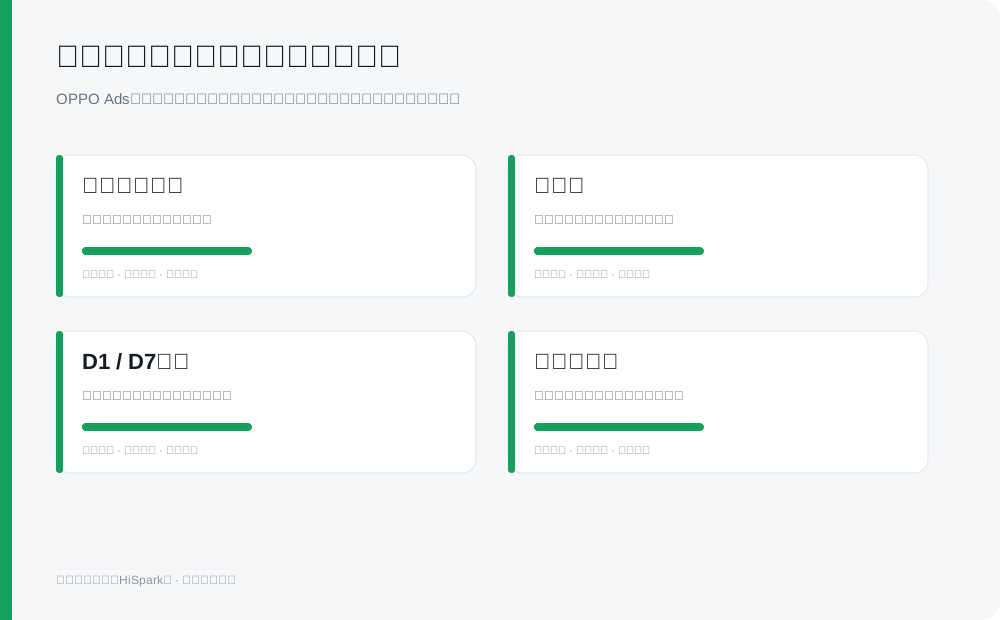
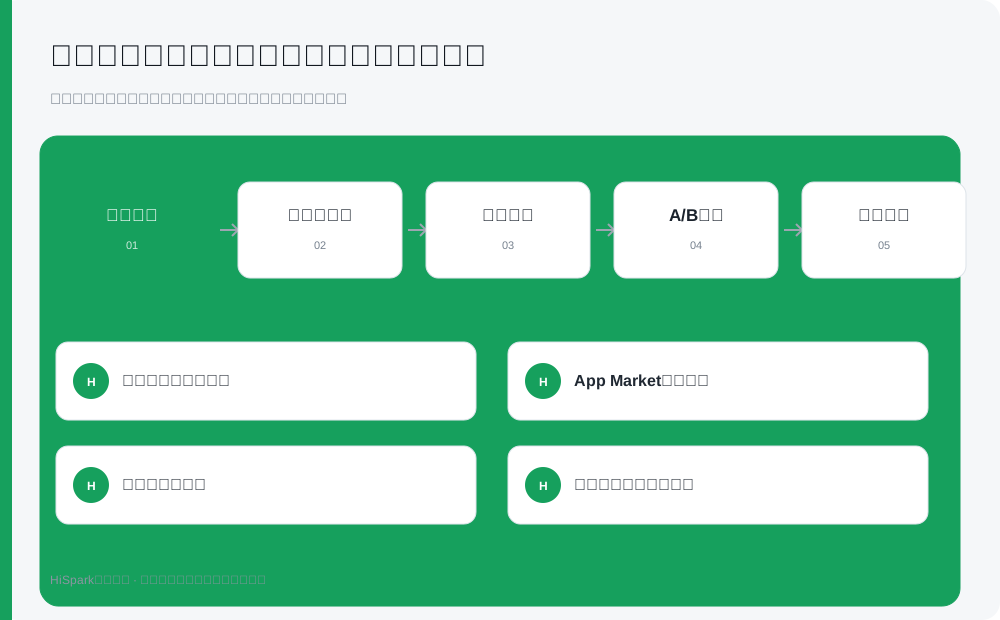
Real platform context
These visuals come from official product pages, developer documentation, public store listings or platform-owned sites. They are used to inspect interfaces, ad contexts and device touchpoints; inclusion does not imply endorsement.
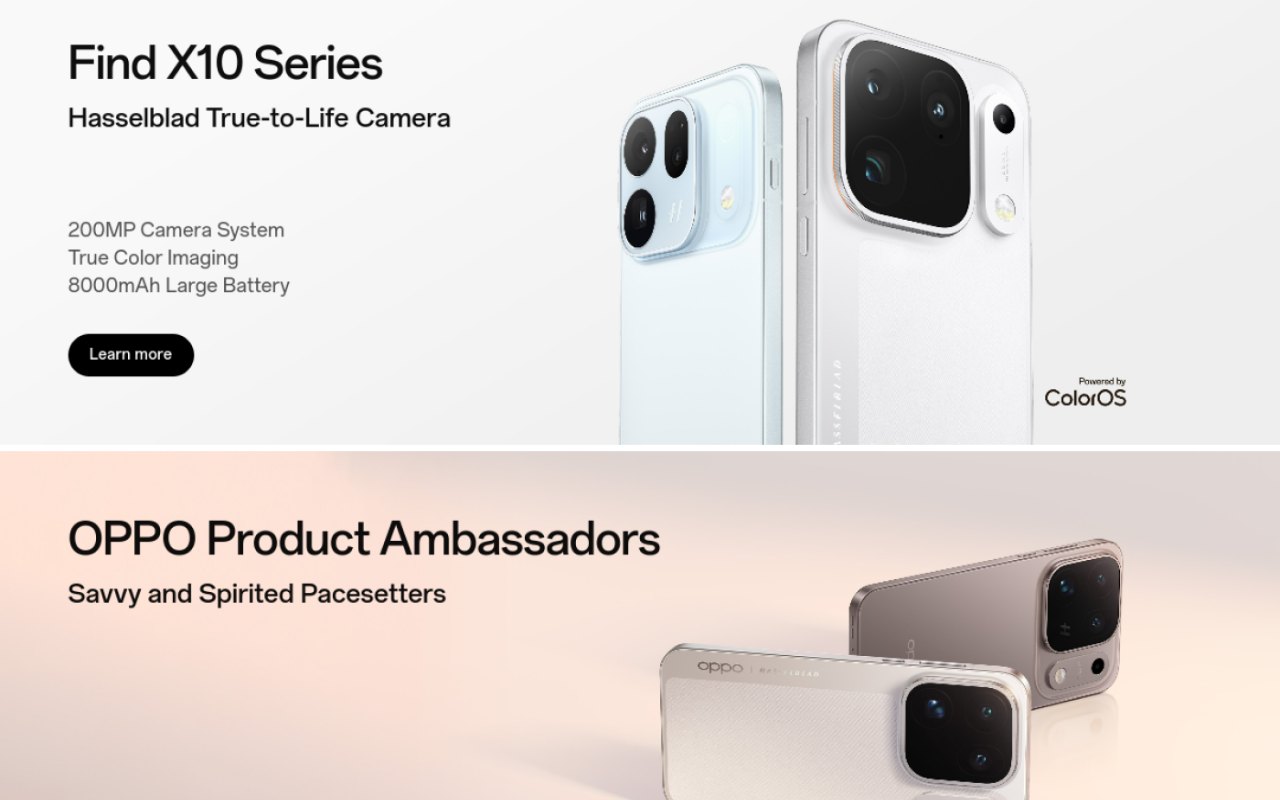
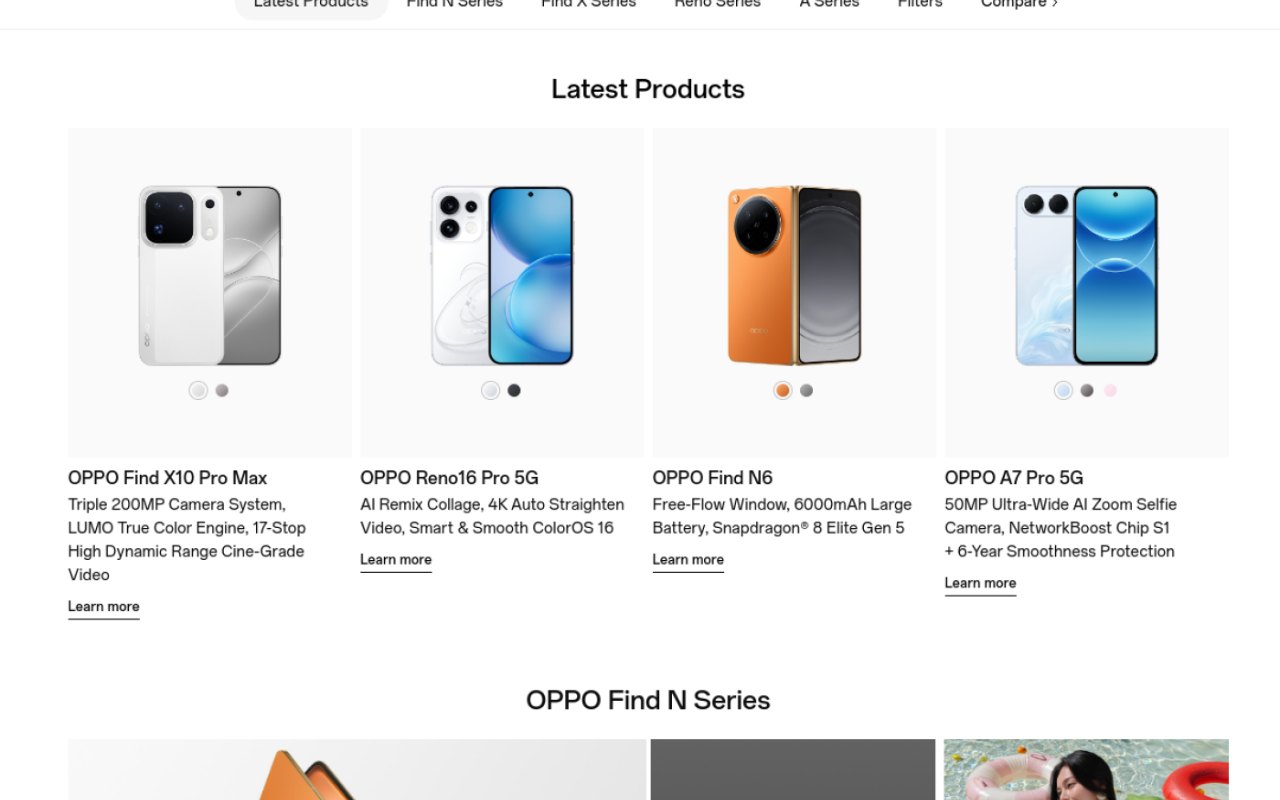
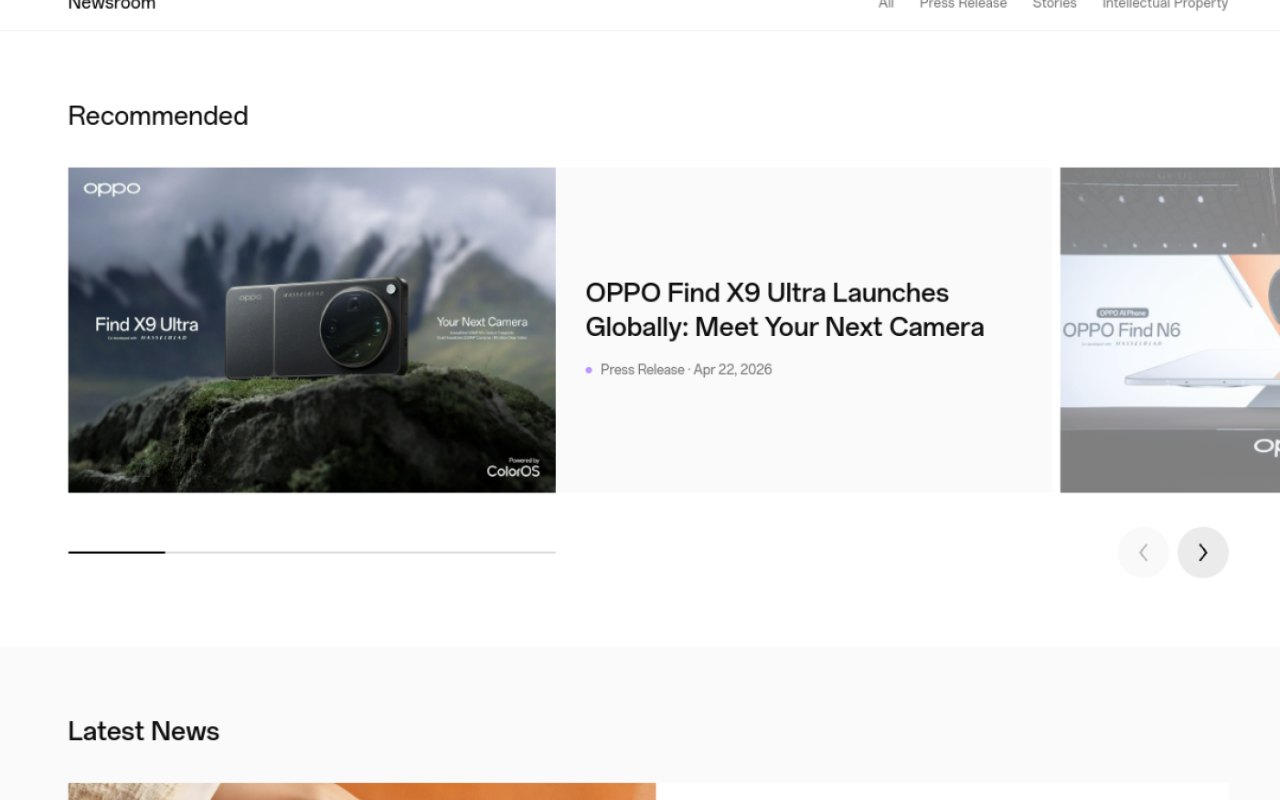
Source: OPPO Official · Official page 1 · Official page 2 · Retrieved 2026-10-28
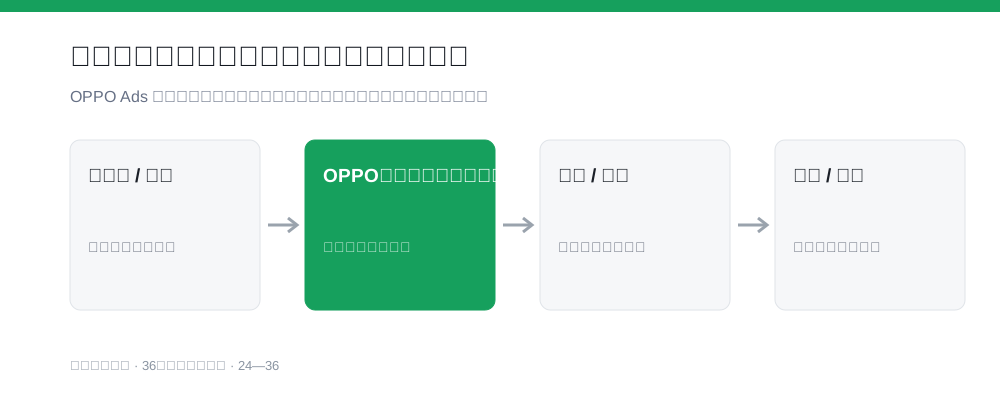
1. Where OPPO Ads creates access
OPPO’s commercial surface includes app-market search, browser, content recommendations and system services, each with different intent and attention.
Creative, store listing and first-open experience need one design. The ad creates attention; the listing must explain value, build trust and complete the install decision.
2. Market selection determines value
User structure varies across Southeast Asia, South Asia, the Middle East and Latin America. A product may fit one country and face device, payment or competition barriers in another.
Review device reach, language, connectivity, payment and competition by country. Validate one or two markets end to end; valid-install cost and first-week value are more reliable than downloads.
3. Coordinating store and paid traffic
The app store is the conversion surface. Title, screenshots, video, ratings, release notes and privacy information all affect conversion. Improve the listing and test compatibility before buying traffic.
Creatives must match delivery. If an ad promises a free or instant outcome that disappears after first open, users leave and ratings suffer.
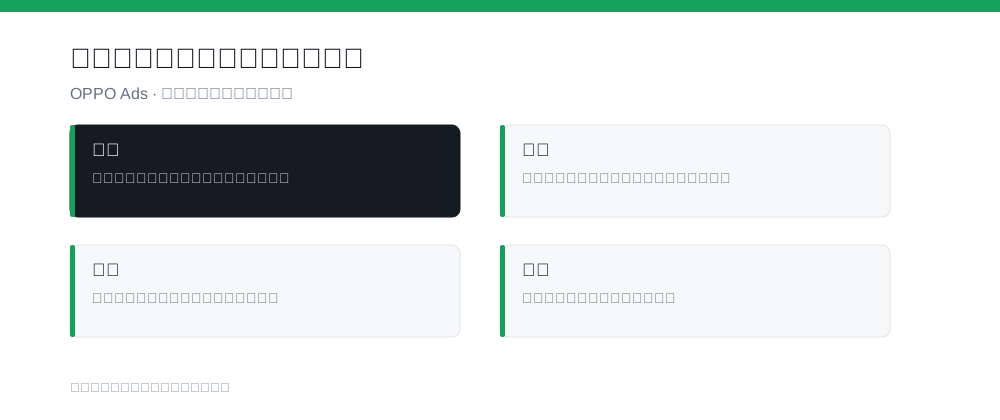
4. Risks and go-live criteria
Device advertising raises questions around permissions, privacy, identifiers and content review. Define data boundaries, consent, ad-content limits and safeguards for minors by market.
A practical pilot includes one region, one objective, verifiable events, two creative and listing variants, responsive review and weekly retention/ROI checks. Scale only after thresholds are met.
5. Put it back into the value chain: five roles are not interchangeable
OPPO Ads belongs to Device-ecosystem advertising. A common mistake is to judge it with metrics owned by another role: demanding DSP-style ROAS from an SSP, or judging an ad server by network fill, produces distorted conclusions.
The better question is which core resource it controls, and whether that resource converts into a verifiable business outcome. For OPPO device traffic and app distribution, scale is not the only answer; transaction quality, data availability and governance matter equally.
Establish the business type and readiness conditions before discussing integration or optimisation. Applying one KPI across every role often turns an organisational issue into a false platform issue.
| Industry role | Core resource controlled | Question to validate |
|---|---|---|
| DSP / demand platform | Budget, audiences and optimisation goals | Can it buy the right audience at a controllable cost? |
| Commerce media | Product data, shopping intent and retail/offsite context | Do product, data and media create incrementality? |
| Native / discovery network | Publisher context, content consumption and next-click attention | Can content turn clicks into valuable actions? |
| SSP / sell-side platform | Inventory, auction paths, signals and deal rules | Can it improve net yield while protecting experience? |
| Omnichannel ad platform | Identity, content context, DSP and multi-screen supply | Can it unify identity, frequency, creative and measurement? |
6. Diagnose before optimising: reading three common signals
A dashboard number is only a symptom. The useful work is connecting what is visible to what may be happening, then validating it with one action. With OPPO Ads, the expensive mistake is rarely a missing button; it is using the wrong metric to explain the business.
| Observed signal | Likely cause | Validate next |
|---|---|---|
| Many downloads but low activation in one country | Compatibility, package size, first-open permissions or listing promise | Split install, first open and key actions by device tier and listing version |
| Creative earns clicks but retention is weak | The asset attracts broad entertainment interest rather than genuine product fit | Rebuild the value promise and verify with day-one completion and D7 retention |
| Costs fluctuate without a clear cause | Regional competition, inventory mix, review status and attribution all move together | Maintain daily cuts by country, placement, creative and release |
7. Why professional delivery should come before account setup
OPPO’s value begins at device entry but is often decided after it: store handoff, package performance, local creative, permissions, privacy and event return. Connecting these parts matters more than opening an ad account first.
A defensible project does not start with an account. It starts with business diagnosis, account and permission checks, SDK/API or mediation integration, event return, placement and frequency design, A/B testing, privacy compliance and billing review. Reverse that order and product, data or compliance issues are easily misread as poor platform performance. Professional delivery identifies blockers earlier and avoids repeated setup, integration and wasted budget.
HiSpark supports overseas monetisation, platform integration, mediation and bidding, A/B testing, attribution, app publishing, app development, web systems and operations. Reply with the platform keyword and consult with your product, market, stage and current stack so fit can be assessed before account setup or scaling.
Quick fit check: who is ready and who should build foundations first
| Business type | Best-fit context | Readiness required | Avoid when |
|---|---|---|---|
| Utility app | Strong device reach and fast value explanation | Compatibility, store, key events and retention | Buying downloads without activation |
| Light entertainment | Suits local content and short video | Regional creative, review, payment and compliance | One asset set across all countries |
| Commerce and services | Clear demand and a complete handoff | Pricing, payment, fulfilment and support | Users cannot complete the core task |
Platform reference: OPPO Ads
Related platforms
Compare nearby platforms by role, resource and operating boundary.