

Measurement fit cases and pilot
Put AppsFlyer into an operating context: who fits, when to be cautious, and how to validate the first pilot.
AppsFlyer fits teams with multiple channels and complex conversion events and a real need to improve 移动归因、深链、SKAN与反作弊.
Do not scale AppsFlyer when post-click outcomes are unexplained or platform-reported metrics are the only evidence.
Start with one market or product version and validate event coverage, attribution quality, anomaly rate and billing reconciliation before expanding.


Mobile advertising is often misread when platform-reported outcomes are treated as incremental truth. AppsFlyer receives touchpoints, matches installs, records events and returns results.
It is neither an ad network nor a simple dashboard. It is decision infrastructure that defines installs, activations and valid sources, and determines action under incomplete data.
Real platform context
These visuals come from official product pages, developer documentation, public store listings or platform-owned sites. They are used to inspect interfaces, ad contexts and device touchpoints; inclusion does not imply endorsement.
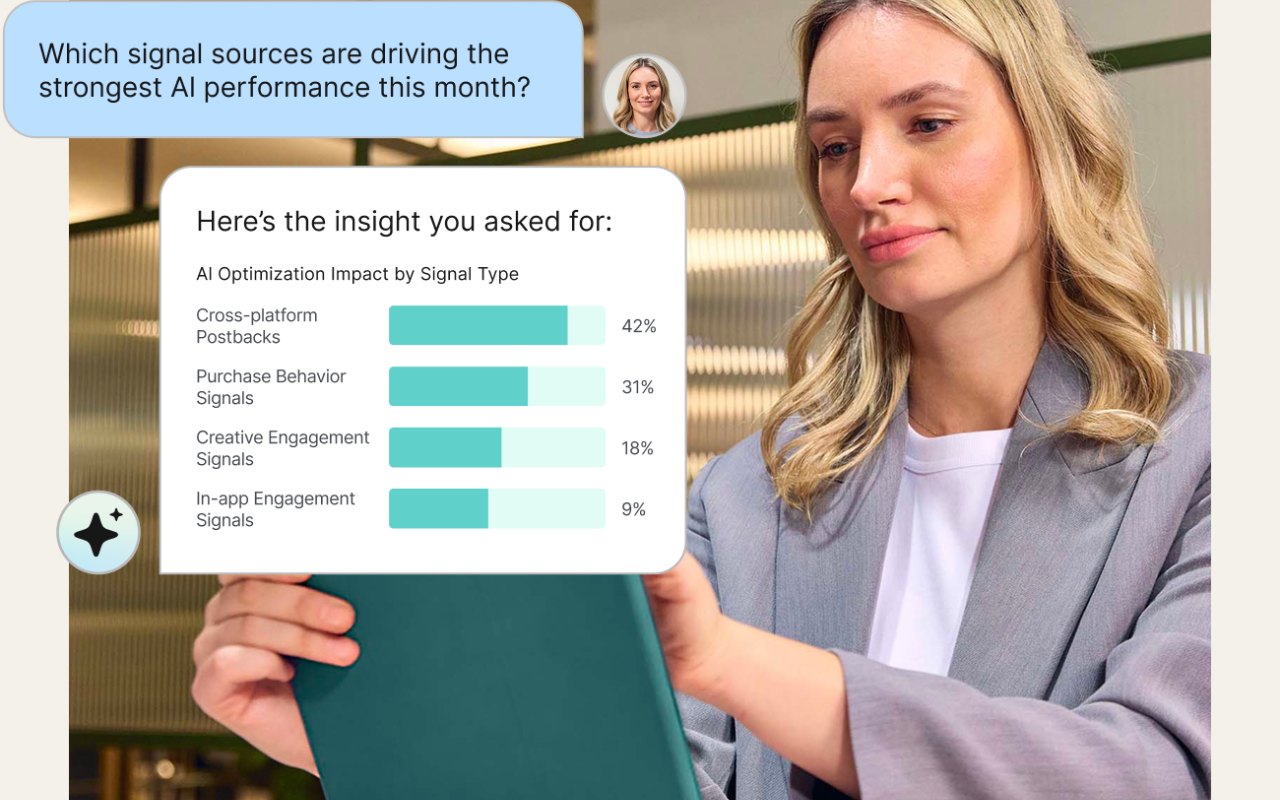

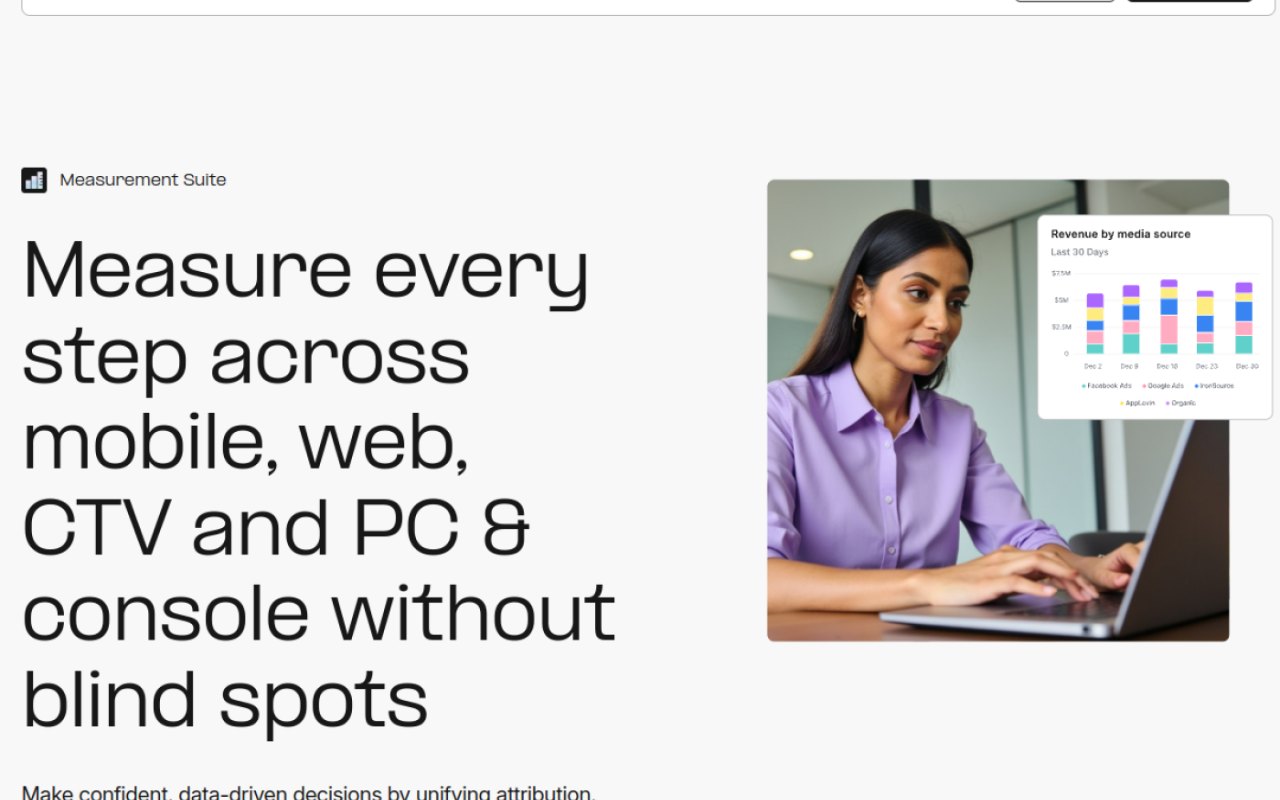
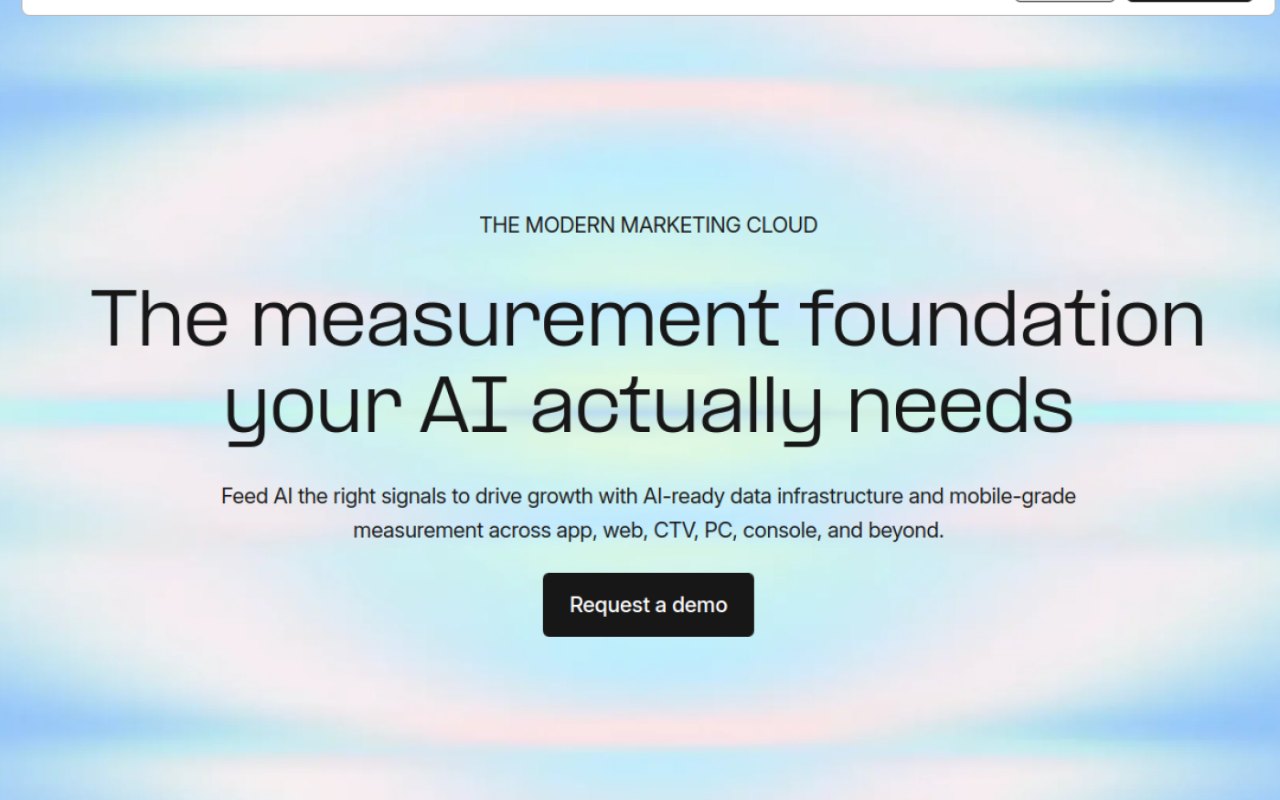
Source: AppsFlyer · Official page 1 · Official page 2 · Retrieved 2026-10-28
1. Where an MMP sits
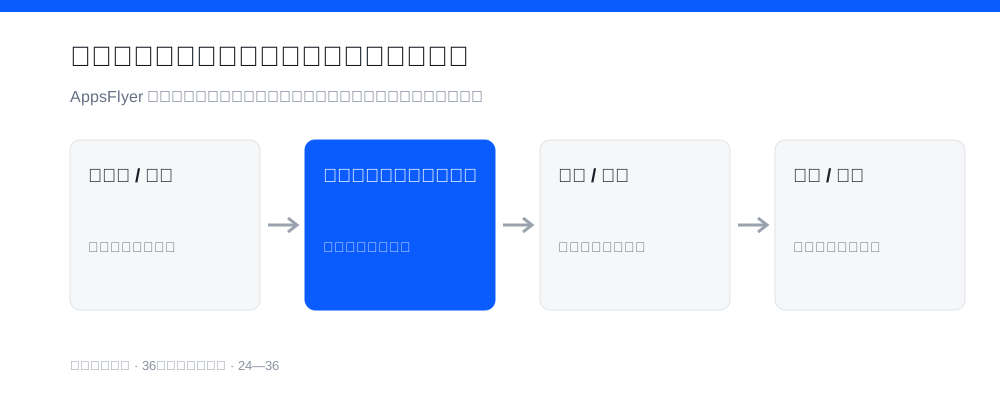
An MMP sits between ad touchpoints, app stores, product events and media dashboards. It connects clicks or views with install, registration and purchase.
That makes it a cross-channel baseline. Attribution is not causation: overlapping touchpoints, organic demand and privacy limits mean recorded relationships do not prove incrementality.
2. Event design is harder than SDK integration
Install is only the beginning. Define activation, registration, key consumption, payment and repeat purchase with shared definitions across product, media and finance.
Create an event dictionary with trigger, de-duplication, time window, owner and use case. Run quality checks before events enter optimisation.
3. SKAN, privacy and cross-channel comparison
Privacy rules make measurement more complex. SKAN provides aggregated signals, but delay, return limits and conversion-value design change optimisation. Android also requires careful consent and identifier management.
Do not force different systems into one falsely precise report. Separate exact attribution, privacy signals, platform reports, finance actuals and experimental incrementality.
4. Fraud control and governance
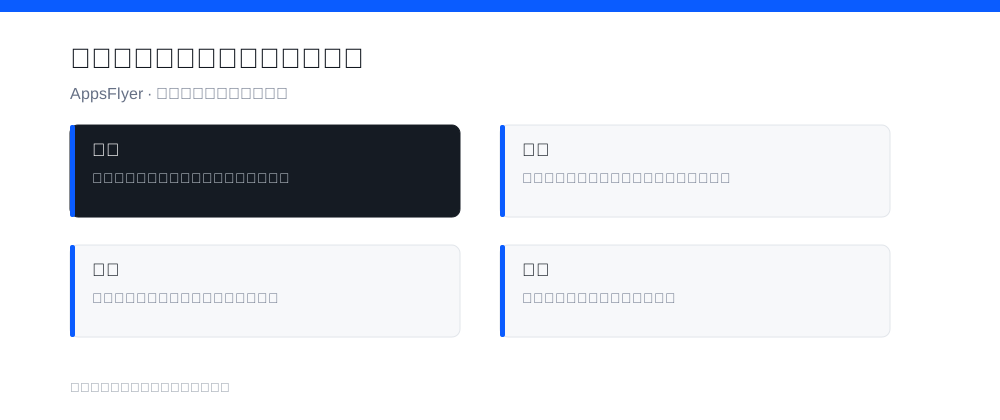
Attribution faces click flooding, fake installs, device farms and hijacking. Platforms provide detection, but advertisers still need source approval, anomaly monitoring, billing checks and review.
Governance covers access, retention, cross-border transfer and vendors. Define who sees user-level data, who exports, how long it is kept and how it is deleted.
5. Put it back into the value chain: five roles are not interchangeable
AppsFlyer belongs to Attribution and growth measurement. A common mistake is to judge it with metrics owned by another role: demanding DSP-style ROAS from an SSP, or judging an ad server by network fill, produces distorted conclusions.
The better question is which core resource it controls, and whether that resource converts into a verifiable business outcome. For Mobile attribution, deep linking and fraud prevention, scale is not the only answer; transaction quality, data availability and governance matter equally.
Establish the business type and readiness conditions before discussing integration or optimisation. Applying one KPI across every role often turns an organisational issue into a false platform issue.
| Industry role | Core resource controlled | Question to validate |
|---|---|---|
| DSP / demand platform | Budget, audiences and optimisation goals | Can it buy the right audience at a controllable cost? |
| Commerce media | Product data, shopping intent and retail/offsite context | Do product, data and media create incrementality? |
| Native / discovery network | Publisher context, content consumption and next-click attention | Can content turn clicks into valuable actions? |
| SSP / sell-side platform | Inventory, auction paths, signals and deal rules | Can it improve net yield while protecting experience? |
| Omnichannel ad platform | Identity, content context, DSP and multi-screen supply | Can it unify identity, frequency, creative and measurement? |
6. Diagnose before optimising: reading three common signals
A dashboard number is only a symptom. The useful work is connecting what is visible to what may be happening, then validating it with one action. With AppsFlyer, the expensive mistake is rarely a missing button; it is using the wrong metric to explain the business.
| Observed signal | Likely cause | Validate next |
|---|---|---|
| Channel reports do not match finance revenue | Event definitions, refunds, time zones and attribution windows differ | Create an event dictionary owned jointly by growth, product and finance |
| iOS optimisation weakens after data loss | SKAN values are too coarse and lack aggregated-signal tiers | Redesign conversion values and calibrate with experiments |
| A new source appears unusually strong | Click overlap, abnormal devices or broken event return | Verify fraud, retention and finance before settlement |
7. Why professional delivery should come before account setup
AppsFlyer does not become trustworthy after SDK installation. Event definitions, deep links, SKAN, fraud controls, consent and finance reconciliation must be designed together. Otherwise teams gain reports, not reliable decisions.
A defensible project does not start with an account. It starts with business diagnosis, account and permission checks, SDK/API or mediation integration, event return, placement and frequency design, A/B testing, privacy compliance and billing review. Reverse that order and product, data or compliance issues are easily misread as poor platform performance. Professional delivery identifies blockers earlier and avoids repeated setup, integration and wasted budget.
HiSpark supports overseas monetisation, platform integration, mediation and bidding, A/B testing, attribution, app publishing, app development, web systems and operations. Reply with the platform keyword and consult with your product, market, stage and current stack so fit can be assessed before account setup or scaling.
Quick fit check: who is ready and who should build foundations first
| Business type | Best-fit context | Readiness required | Avoid when |
|---|---|---|---|
| Multi-channel media team | Needs common cross-channel definitions | Event dictionary, integrations, access and reconciliation | Treating attribution as incrementality |
| Privacy-sensitive product | Must manage consent, SKAN and limited data | Privacy review, conversion values and minimisation | Promising exact user-level tracking |
| Scaling overseas team | Many sources, countries and reconciliation needs | Shared governance across finance, growth, product and data | Separate definitions in each team |
Platform reference: AppsFlyer
Related platforms
Compare nearby platforms by role, resource and operating boundary.