 Shenzhen HiSpark Ad Media Co., Ltd.
One-line conclusion: BIGO is not really a content platform. It is a virtual-goods retailer. What users buy is not the livestream, it is the status they feel the moment they tip.
That single judgment explains three things: why BIGO expanded faster in emerging markets than in the US and Europe, why its revenue leans on virtual items instead of advertising, and why it can never escape content compliance.
This piece breaks BIGO down across nine dimensions: company basics, business model, how the revenue mix evolved, product matrix, go-to-market path, competition, compliance risk, what it means for anyone building live or audio products, and a short summary.




1. Company basics: from a China-born team to a Singapore headquarters
| Stage | Timing | What happened |
|---|---|---|
| Start | Around 2014 | The team spun out of voice and live-streaming work and chose Singapore as both headquarters and launchpad |
| Product expansion | 2016 to 2018 | Live products spread fast across Southeast Asia, the Middle East and South Asia; short video was incubated in the same period |
| Capital consolidation | Around 2019 | Folded into Joyy, becoming the group's core overseas asset |
| Restructuring | 2020 to 2024 | Domestic businesses were divested one by one; overseas live streaming and advertising became the listed company's main revenue source |
Four milestones in BIGO's path
The takeaway: BIGO is the textbook version of one outbound formula — Chinese team, Singapore headquarters, emerging markets. It did not fight the giants head-on in the US and Europe. It took the markets the giants were not looking at yet.

2. Business model: virtual gifts are the engine, ads are the second gear
| Line of business | What it does | Where the money comes from | Revenue character |
|---|---|---|---|
| Live tipping | Hosts stream, users interact | Share of virtual gifts (platform cut) | High order value, dependent on a small number of top users |
| Advertising | On-platform inventory and an ad network | Advertiser spend | Scales with traffic, higher margin |
| Other | Memberships and value-added features | User subscriptions | Small share, high retention value |
Revenue mix: tipping dominates, ads are the second engine
Core judgment: live tipping is virtual-goods retail, not content distribution. The platform does not make money selling content. It sells the dignity of having given something. Two things follow.
First, revenue leans heavily on a small group of top-paying users. This is true of the whole live-show industry: the share of paying users is tiny, but the top spenders pay enormously. Level systems, leaderboards and co-host battles are all designed to amplify that self-expression.
Second, advertising is a second engine that grew later. Once live streaming had accumulated traffic and user profiles, ads and the ad network became the obvious second curve, which is why the ad business was pushed to the front much later.
3. How the revenue mix evolved: from a single engine to live plus ads
| Stage | Rough shape | What drove it |
|---|---|---|
| Single-engine | Live tipping was almost all revenue | Emerging-market traffic dividend plus maturing payment rails |
| Two-engine | Live dominant, ads starting | Traffic reached scale and advertisers began to buy |
| Mix optimisation | Live held the base, ads and value-added accelerated | Domestic divestitures let the overseas assets be valued on their own |
Three stages of the revenue mix
Why this curve matters if you build overseas products: get cash flow working with a strong-monetisation category first (tipping, in-app purchase), then use advertising to monetise the users who never pay. It is the path Chinese outbound teams know best.
4. Product matrix: live streaming, short video and messaging
| Product | Positioning | How it monetises |
|---|---|---|
| Live streaming app | Live social with strangers | Mainly virtual gifts |
| Short video app | Content community | Ads plus value-added services |
| Instant messaging | Communication tool | Ads plus value-added |
The logic of the trio is traffic complementarity: messaging and short video pull users in, live streaming turns that traffic into revenue. An entry product plus a monetisation product is the most common structure for outbound teams fighting on many fronts.
But the combination has a cost. Three parallel lines mean three content-moderation teams, three localisation efforts and three compliance budgets. The organisational drain is far heavier than running a single product.
5. Go-to-market: why emerging markets came first
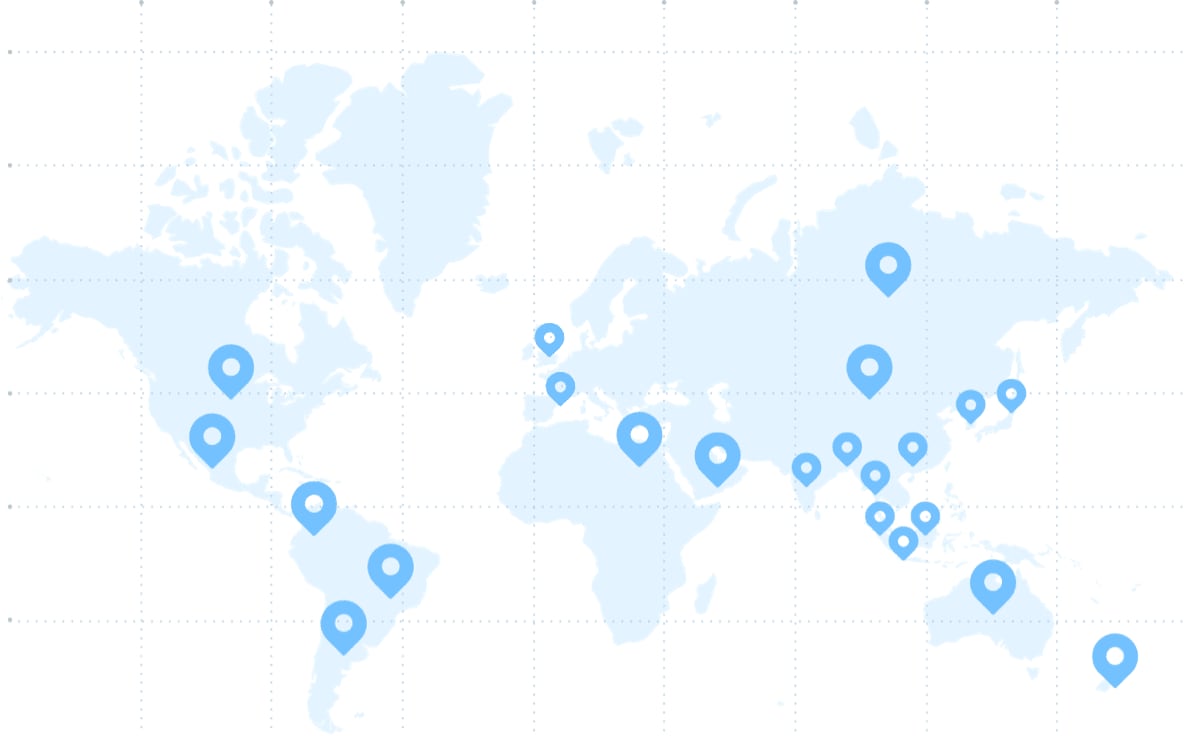
BIGO's market logic is clear: go first where competition is weak, payment habits are maturing and good content is scarce.
| Market type | Competitive intensity | Monetisation difficulty | Strategy |
|---|---|---|---|
| Southeast Asia | Medium | Medium to low | The early main battlefield, high acceptance of live culture |
| Middle East | Low | Low (strong willingness to pay) | High order value |
| South Asia | Medium to high | High | Large traffic, weak payments, suited to advertising |
| US and Europe | High | Medium | The giants' home turf, needs a differentiated angle |
Market selection: enter the least contested market first
What this means for anyone building overseas products: emerging markets are not second-tier markets, they are earlier markets. In the same product category, whoever finishes localisation first banks the next few years of cash flow.
6. Competition: three kinds of rivals, three different fights
| Rival type | Examples | How they compete |
|---|---|---|
| Global short-video giants | TikTok and others | Squeeze every content app with sheer traffic scale |
| Other Chinese live-streaming players abroad | Regional leaders | Compete directly for the same users and the same hosts |
| Local social platforms | Domestic players in each market | Hold share through local relationship graphs and payment channels |
The real pressure comes from the first group. Short-video platforms hold both user time and advertising budget. How high a live-streaming app can grow depends largely on whether it can defend its share of user time.

7. Compliance risk: content moderation is the lifeline
Live and stranger-social products face three persistent pressures overseas.
One, content moderation. Many markets, many languages, real-time video: the cost cannot be amortised through a single system.
Two, minor protection. Tipping mechanics are naturally exposed to accusations of inducing minors to spend, and regulators have been tightening their stance.
Three, money and data compliance. Cross-border payments, host payouts and outbound user data each need to be designed market by market.
Rule of thumb from the industry: compliance cost belongs inside the unit-economics model, not in the budget you scramble for after an incident. For live products this usually runs in the low single digits as a share of revenue, but when it goes wrong the cost is a delisting-grade event.
8. What it means for us: the monetization order for live and audio products
| Question | How to ask it | BIGO's answer |
|---|---|---|
| Monetisation engine | Will users pay for status? | Yes, tipping is the main engine |
| Market choice | Which market first? | Low competition, high willingness to pay |
| Second curve | When do ads come in? | Only after traffic reaches scale |
| Compliance cost | Is it in the model? | It has to be |
| Product portfolio | One product or a matrix? | A complementary matrix, at a high organisational cost |
The last row matters most: the moat in live streaming is not content, it is the paying relationship between hosts and users. Content can be copied. A relationship people keep paying into cannot.
9. Summary
- Identity: BIGO is a virtual-goods retailer, not a content distribution platform.
- Structure: tipping is the main engine; advertising is a second curve that grew later.
- Path: emerging markets first, trading low competition for time to localise.
- Risk: content moderation and minor protection are the lifeline, and the cost must sit inside the model.
A fit table for tipping, advertising and subscription engines, plus market entry order and a compliance checklist.
What is inside:
- A fit table for the three engines: tipping, advertising and subscription
- An emerging-market entry order and compliance checklist
- A self-check list for the monetization architecture of an overseas product