 Shenzhen HiSpark Ad Media Co., Ltd.

 Model
 Signals
 Efficiency
 ROAS
HiSpark · Overseas App Monetization Research · October 2026
The short answer: Moloco is built around machine learning and performance advertising. Its public product set includes Moloco Ads, Moloco SDK, the CARA engine and Moloco Commerce Media, covering acquisition, retargeting, CTV performance and commerce media for retailers and platforms.
This report does not begin with a platform encyclopedia. It answers three questions: where the platform sits in the growth stack, what makes it genuinely different, and when a team should not integrate it.


Positioning
At a glance: strengths and trade-offs
| Dimension | Clear advantage | Real cost |
|---|---|---|
| Machine learning | Models improve the match between users, context and bids | Small samples and sparse events make the advantage hard to validate |
| First-party signals | Closer to purchases, subscriptions and retention value | Consent, purpose limitation and cross-team governance cost more |
| ROAS orientation | Better for payback and incrementality goals | Poor fit for lowest-CPI strategies or products without long-term data |
Conclusion: Moloco fits data-ready teams willing to run controlled experiments, not teams looking for an instant buying shortcut.
Moloco is built around machine learning and performance advertising. Its public product set includes Moloco Ads, Moloco SDK, the CARA engine and Moloco Commerce Media, covering acquisition, retargeting, CTV performance and commerce media for retailers and platforms.
| Dimension | Moloco emphasis |
|---|---|
| Demand | Models identify users more likely to convert |
| Supply | Machine learning improves ad-to-context matching |
| Data | First-party signals, events and fast feedback |
| Commerce | Performance ads, retargeting and commerce media |
| Poor fit | Teams without data foundations or a lowest-CPI-only mindset |
In one line: Moloco is not selling the cheapest install; it is selling better decisions for each impression.
Where the platform came from
Moloco has positioned itself closer to machine-learning advertising infrastructure than to a traditional media agency. It applies one modelling capability across acquisition, retargeting, CTV performance and Commerce Media.
| Core module | Commercial meaning |
|---|---|
| Moloco Ads | Finds higher-value users for advertisers |
| Moloco SDK | Connects publisher traffic and monetization |
| CARA | Provides prediction and optimization |
| Commerce Media | Extends advertising into retailers and platforms |
Moloco sells prediction and matching capability. More customers are not automatically better; better data makes the system more valuable.
Methodology
The hard part of performance advertising is not delivery. It is deciding within a second who values the impression, what to bid, which creative to use and how outcomes should be fed back.
Moloco builds on three signal layers:
- First-party signals: product events, purchases and retention;
- Context signals: app, placement, device and environment;
- Feedback signals: clicks, installs, registrations, purchases and callback delay.
Models are not magic. Sparse signals, late events and small samples make predictions unstable. The real moat is not saying “AI”; it is turning data quality and experimental discipline into daily operations.
Product map
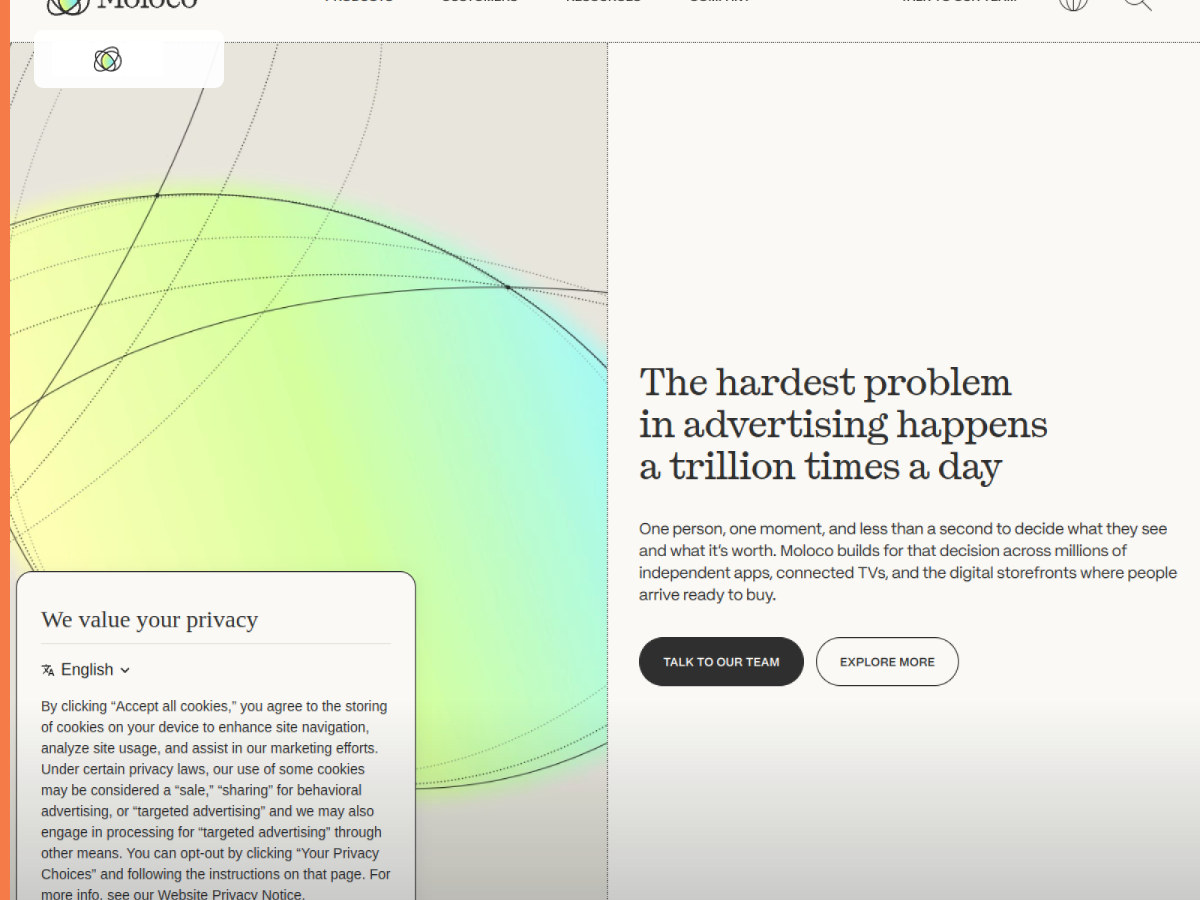
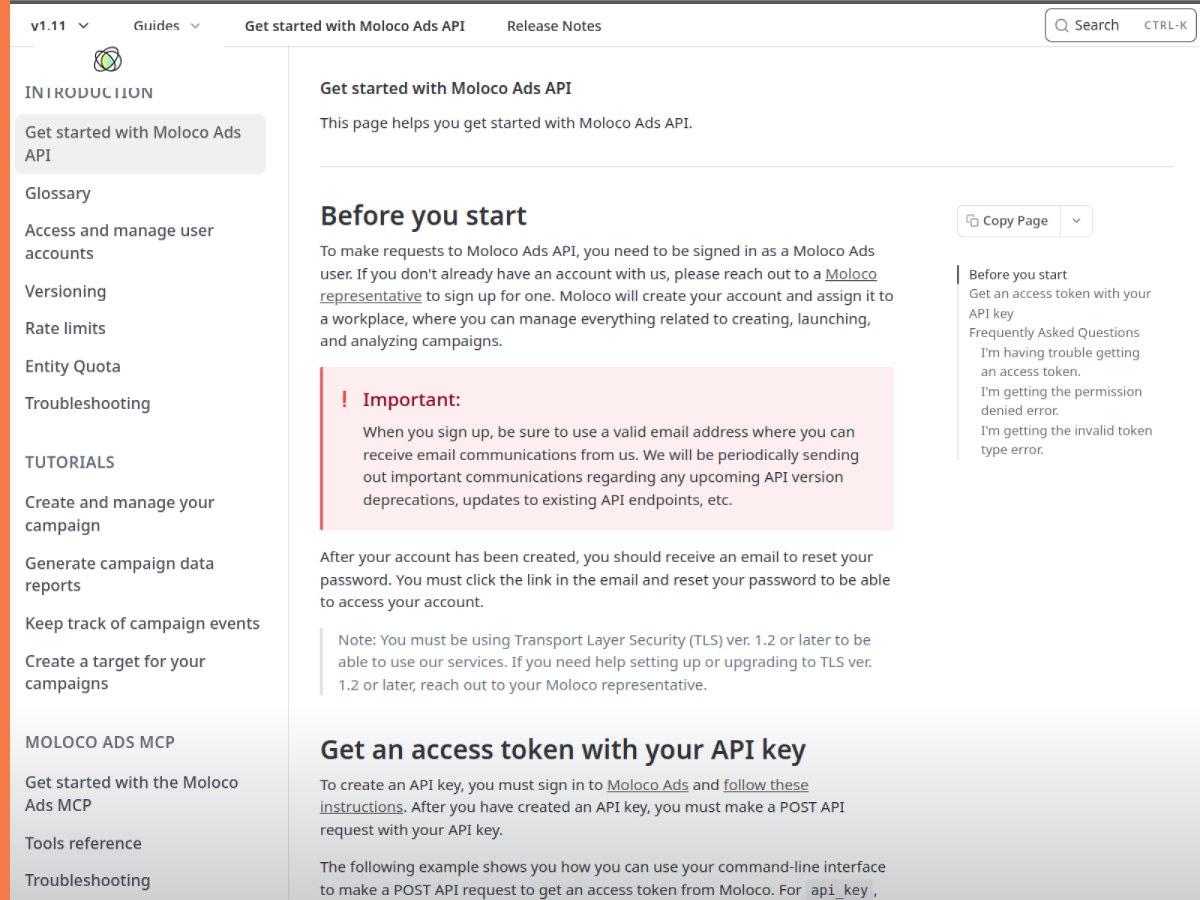
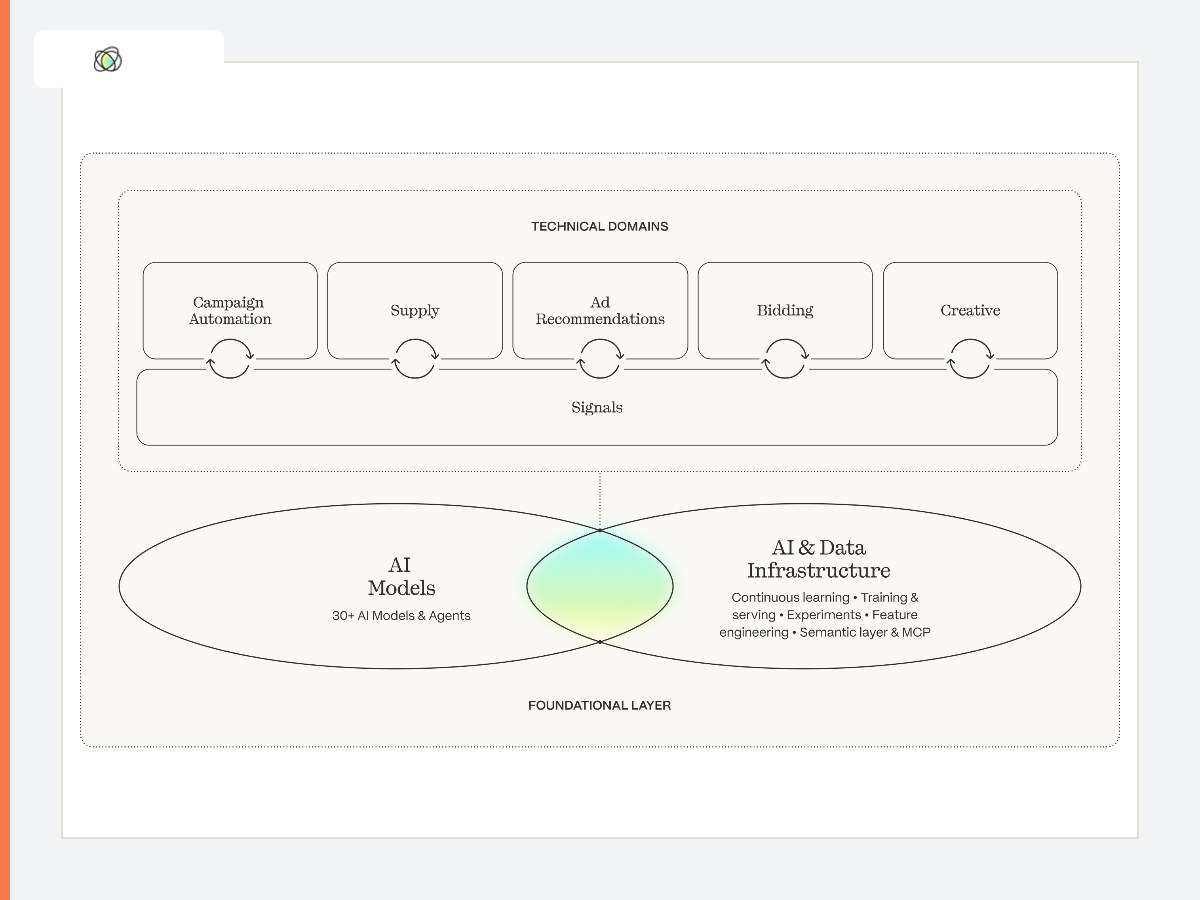
来自 Moloco 官网公开产品视频。
| Product | Main user | Problem solved | Prerequisite |
|---|---|---|---|
| Moloco Ads | Advertisers and performance teams | Acquisition, retargeting and CTV performance | Events, conversion value and creative |
| Moloco SDK | Publishers and platforms | Ad requests, impressions and monetization | Traffic scale, placements and mediation |
| CARA | Data and algorithm teams | Prediction and optimization | High-quality data and feedback loops |
| Commerce Media | Retailers and platforms | On-site ads and commerce media | Product, transaction and user data |
Do not collapse all four products into “one ad network.” Ads is demand and performance; SDK and Commerce Media are closer to supply and commercialization infrastructure.
Differentiation
Advantage 1: ROAS-centric optimization
Moloco is more relevant to teams optimizing user quality and payback than teams chasing install volume alone.
Advantage 2: first-party signals
For products with membership, subscriptions, transactions or game behavior, first-party signals bring models closer to real value.
Advantage 3: from apps to commerce media
Moloco extends beyond mobile apps into retailer, platform and CTV monetization, which fits companies with cross-surface commercial goals.
Boundary: model advantages require samples, event quality and experimentation. Small budgets, short windows and missing retention data make the value hard to prove.
Direct comparison with adjacent platforms
| Comparison | Where Moloco is stronger | Where the other platform is stronger |
|---|---|---|
| Moloco vs Meta | Deeper first-party-data and model-optimization narrative | Meta has broader global advertiser demand |
| Moloco vs Mintegral | ROAS modelling and cross-surface commercialization | Mintegral has a fuller interactive creative and game-growth loop |
| Moloco vs Adjust | Directly participates in acquisition and bidding decisions | Adjust provides an independent cross-channel measurement layer |
Decision rule: use Moloco when data is strong and incrementality testing is realistic; use Adjust for measurement and Mintegral for a game creative loop.
Fit map
Main advantage regions
CORE marks the platform’s main advantage regions
| Market | Why it fits | What to watch |
|---|---|---|
| CORENorth America | Mature first-party data, payments and adtech ecosystem | High competition and CAC require strict incrementality tests |
| CORESouth Korea and Japan | Strong games, commerce and mobile services with quality feedback | Local language, privacy and channel ecosystems need adaptation |
| COREWestern Europe | Mature compliance and value-led ROAS optimization | Consent, attribution windows and governance cost more |
| Southeast Asia | Fast growth for model and creative tests | Sample and event quality may be insufficient at the start |
| LATAM and the Middle East | Potential incremental markets | Payments, refunds, traffic quality and payback vary |
| Team type | Fit | Prerequisite |
|---|---|---|
| Games with stable payments | High | Event value, D1/D7 and explainable callback delay |
| Subscription tools/content | High | Subscription events, churn and LTV |
| Commerce/transaction platforms | Medium-high | Product, payment, refund and margin data |
| Small-budget new apps | Low to medium | Build sample and event quality first |
| IAA-only with no events | Medium | Establish ad revenue and retention models |
The key filter: is the team willing to put user quality into KPIs instead of ranking every channel by a single install cost?
Integration prerequisites
Moloco is not finished when an SDK is installed. Prepare at least:
- A unified event dictionary and conversion values;
- Server callbacks and delay monitoring;
- Consent, purpose limitation and retention rules;
- Comparable control groups and incrementality tests;
- MMP or internal verification independent of the platform dashboard.
Engineering advice: establish an explainable data chain before increasing budget. Do not turn platform ROAS directly into financial forecasts; reconcile it with MMP, BI and payment data first.
Economics
Evaluate Moloco through value recovery, not traffic price alone:
| Metric | Role | Question to ask |
|---|---|---|
| ROAS | Revenue and purchase recovery | Are windows and refunds consistent? |
| CAC | Acquisition cost | Does it include creative, channel and tech cost? |
| LTV | Lifetime value | Is it segmented by market and payer tier? |
| Payback | Recovery period | Does it fit cash flow? |
| Incrementality | True incremental impact | How much would be lost without this platform? |
Key point: a model can improve short-term ROAS while net incrementality remains negative if retention, refunds or organic demand are displaced.
Risk boundaries
Moloco's advantage comes from data, and so does its risk:
- Consent and purpose limitation: first-party signals are not unlimited model fuel;
- Event bias: sending only high-value events can hide long-term value;
- Insufficient samples: small tests easily mistake noise for signal;
- Attribution windows: platform and MMP reports differ by design;
- Content and vertical policy: finance, gaming, health and other categories face extra constraints.
Advice: put privacy, legal, data engineering, growth and finance in the same review before deciding which signals enter the platform.
90-day test
Weeks 1–2: map events, values, callback delay and current attribution.
Weeks 3–4: create a control experiment in one market and user segment.
Weeks 5–6: test Moloco Ads at small budget, recording ROAS, retention and refunds.
Weeks 7–8: reconcile with MMP and BI; check incrementality rather than the platform dashboard alone.
Weeks 9–12: scale, hold or stop based on an explainable payback period.
Free resource: the Moloco First-Party Signal & ROAS Diagnostic Sheet. Scan the QR code or email info@hi-spark.com. HiSpark provides monetization integration, SDK/API delivery, event-data design and app-store publishing.
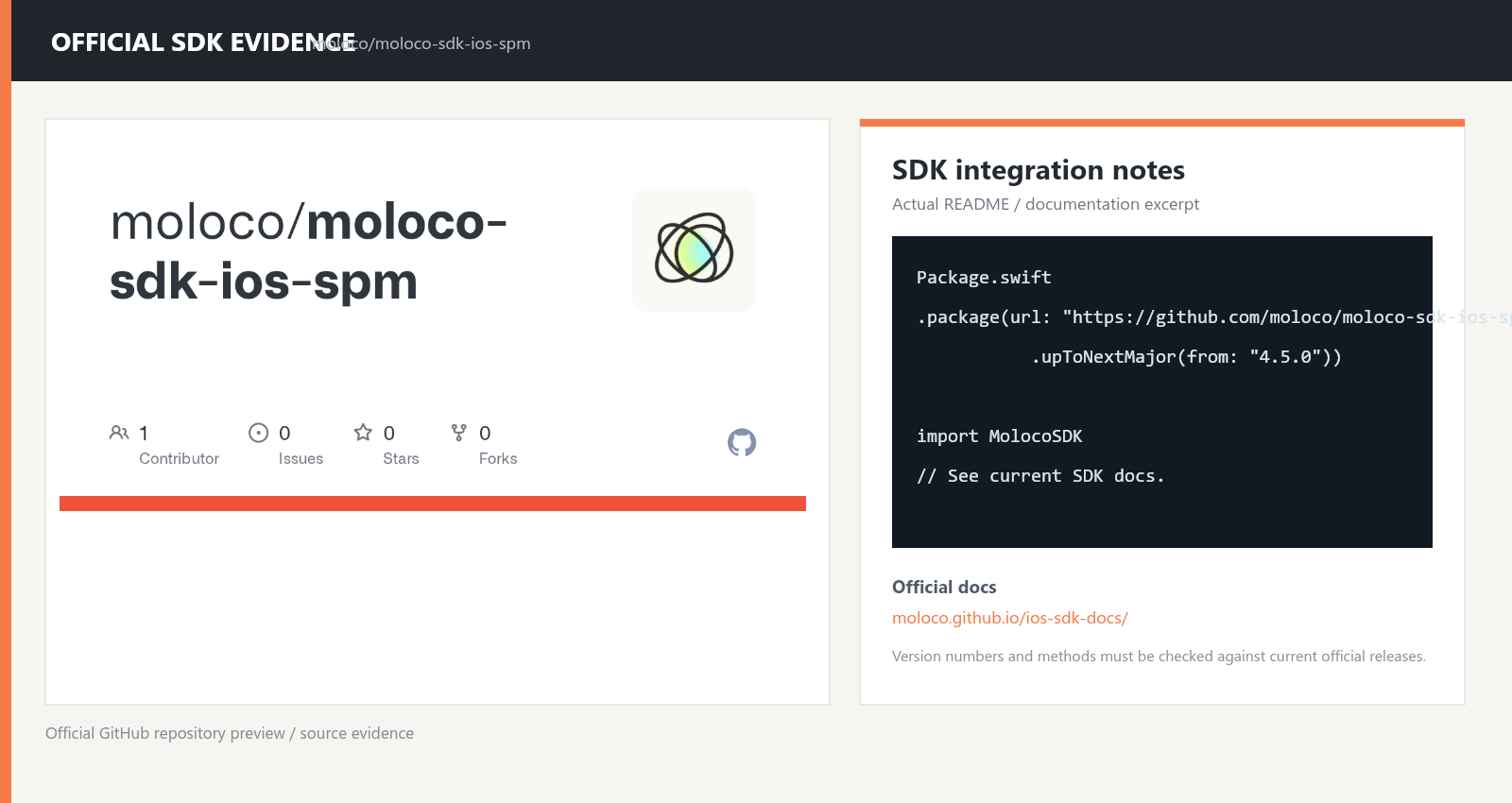
Appendix: official developer documentation and SDK checklist
Official developer entry: https://developer.moloco.cloud/docs/getting-started
Commerce Media docs: https://mcm-docs.moloco.com/docs/what-is-moloco-mcm
| Check | What must be confirmed before launch |
|---|---|
| Event taxonomy | Unified install, registration, key-action, purchase, refund and retention fields |
| Conversion value | Explainable event values and payback windows |
| SDK and server | Client events, server callbacks, delay handling and deduplication |
| Model warm-up | Sample size, cold-start period, control group and incrementality design |
| Privacy governance | Purpose, consent, retention and deletion for first-party signals |
| Fraud controls | Abnormal events, device farms and low-quality source detection |
| Finance reconciliation | Align platform ROAS, MMP, payments and BI definitions |
| Production monitoring | Budget pacing, payback, refunds and model drift |
Documentation takeaway: prove data quality, event credibility and testability before moving to a large budget.
Frequently asked questions
- Who should use Moloco?
- A deep dive into Moloco: Moloco Ads, SDK, CARA and Commerce Media, first-party signals, ROAS optimization, fit, integration, privacy and a 90-day test.
- What should be checked before integration?
- Validate markets, mediation/ad stack, consent, events and attribution before integration.
- How should performance be judged?
- Compare eCPM, show rate, ARPDAU, retention, LTV/CAC and net revenue together.
Official page: https://www.moloco.com/zh
Make the data explainable before scaling with models
Submitting opens your email app. Confirm the message to complete the request. A CRM endpoint can capture leads directly.