


Yahoo is still associated with its portal, mail and news heritage. In advertising, however, Yahoo Ads now spans display, native, video, CTV, audio and programmatic buying.
Its distinction is the combination of owned content context, first-party relationships, identity solutions and demand-side tools. The question is not whether Yahoo still has traffic, but whether those signals improve recognition, frequency control and measurement across channels.

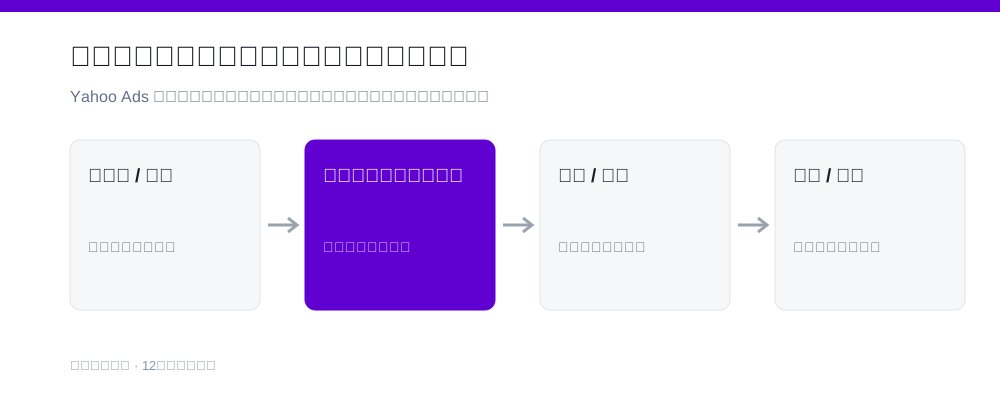
1. Neither a single publisher nor a pure DSP
Yahoo Ads has both supply and demand capabilities: owned content and media relationships on one side, advertiser-facing programmatic buying and optimisation on the other. It can place owned contexts and external inventory inside one audience, frequency and reporting framework.
That makes it different from a pure buying DSP and from a publisher selling only its own inventory. The real question is whether the platform can turn those assets into a stable, explainable omnichannel buying experience.
2. Identity is the foundation of omnichannel
Across CTV, display, native, audio and mobile, advertisers worry about duplicate reach, broken frequency control and incomparable reporting. Identity systems exist to connect those gaps.
Yahoo's identity and first-party relationship assets can provide more stable signals in some contexts, but identity is not a master key. Coverage, consent, media environment and measurement vary by market. Advertisers must validate reach and incrementality rather than confuse identifiability with attribution.
3. Content context supports attention and brand safety
Yahoo's news, finance, sports and lifestyle content provide explainable context. Compared with fully open inventory, owned environments make placement quality, content classification and user experience easier to control.
Owned context also limits scale. Brands need to confirm whether their audience is genuinely active there and whether formats fit reading, video or audio behaviour. Using one creative pack across every context is often the fastest way to waste budget.

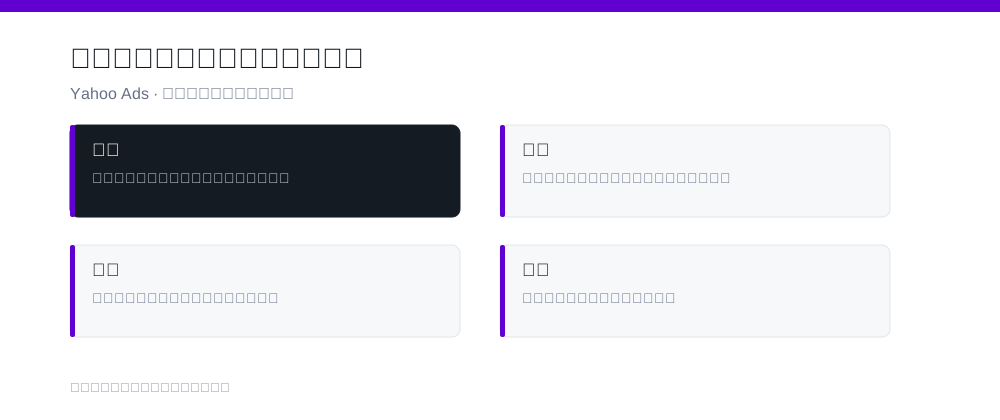
4. Which growth jobs fit
It fits North American brand reach and omnichannel frequency management, cross-screen planning across CTV, video, display and native, trust-sensitive categories that benefit from news, finance or sports context, and mature advertisers seeking to extend identifiable audiences.
Very small budgets, highly niche markets or teams without creative depth may find Yahoo Ads complex. Success requires cross-channel goals, multiple creative sets and consistent review rather than copying one channel's KPI into every other channel.
5. Put it back into the value chain: five roles are not interchangeable
Yahoo Ads belongs to Programmatic DSP & Omnichannel. A common mistake is to judge it with metrics owned by another role: demanding DSP-style ROAS from an SSP, or judging an ad server by network fill, produces distorted conclusions.
The better question is which core resource it controls, and whether that resource converts into a verifiable business outcome. For Identity-led omnichannel advertising, scale is not the only answer; transaction quality, data availability and governance matter equally.
Establish the business type and readiness conditions before discussing integration or optimisation. Applying one KPI across every role often turns an organisational issue into a false platform issue.
| Industry role | Core resource controlled | Question to validate |
|---|---|---|
| DSP / demand platform | Budget, audiences and optimisation goals | Can it buy the right audience at a controllable cost? |
| Commerce media | Product data, shopping intent and retail/offsite context | Do product, data and media create incrementality? |
| Native / discovery network | Publisher context, content consumption and next-click attention | Can content turn clicks into valuable actions? |
| SSP / sell-side platform | Inventory, auction paths, signals and deal rules | Can it improve net yield while protecting experience? |
| Omnichannel ad platform THIS PLATFORM | Identity, content context, DSP and multi-screen supply | Can it unify identity, frequency, creative and measurement? |
Quick fit check: who is ready and who should build foundations first
| Business type | Best-fit context | Readiness required | Avoid when |
|---|---|---|---|
| North American brand advertiser | Unified reach across display, video, native and CTV | Cross-channel goals, creative matrix and frequency rules | Judging all inventory by one channel's ROAS |
| Mature performance team | Existing data and measurement with an identity extension goal | Consent, event quality and incrementality tests | Treating identity coverage as conversion proof |
| Content-led and brand categories | News, finance, sports and lifestyle context strengthen the brand | Content controls, brand safety and context-specific creative | Using one asset across every context |
Platform reference: Yahoo Advertising