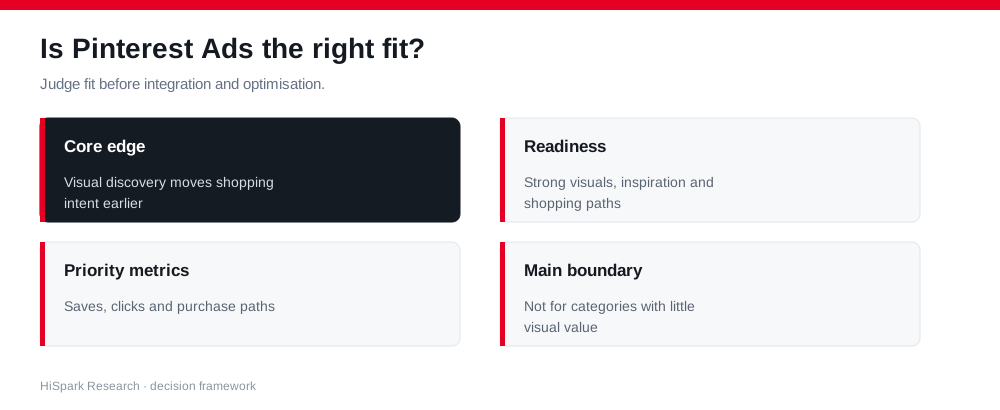






Quick decision: who should look closer, and who should wait
| Best fit | Required foundation | Avoid when |
|---|---|---|
| Home, fashion, beauty, weddings, travel | Scenario imagery, product feeds and saveable content | Weak visual differentiation or pure impulse goods |
| Research-heavy and comparison-led categories | Creative shows the outcome, not just the product | No consistent visual production |
| Long-cycle commerce and seasonal retail | Clear stock, pricing and fulfilment | Mismatched feeds and landing pages |
Check whether the business has the required foundation before discussing account setup, assets, data and budget. Specific decisions depend on category, account and market context.
Shenzhen HiSpark Ad Media Co., Ltd. supports Bidding, Waterfall and hybrid strategies, with multi-platform A/B testing, traffic bucketing, floor-price configuration and revenue reviews. The goal is to save implementation time, avoid integration pitfalls and improve test efficiency.
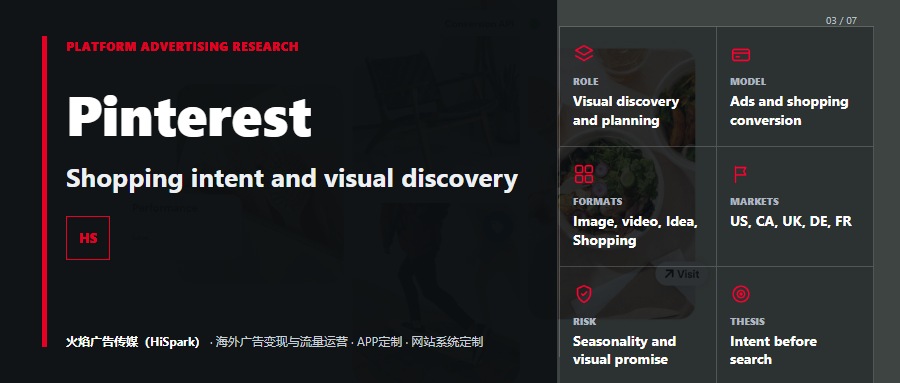
Pinterest is often misread as either a social network or a search engine. It is both a visual discovery system and a planning environment. The official product story centers on discovering ideas, planning and shopping, which is more useful than the old shorthand that Pinterest is simply a female-skewed image feed.
The real asset is content durability. A Pin can be saved, revisited and used weeks or months later. The platform offers a way to enter the customer's planning process before a precise product search has formed.
01. From visual interest to shopping intent
Pinterest targeting can combine keywords, interests, audiences, geography and shopping behavior. It works better for planning and comparison than for pure impulse. Users research a room design, travel route, wedding checklist or seasonal outfit before they know exactly what to buy.
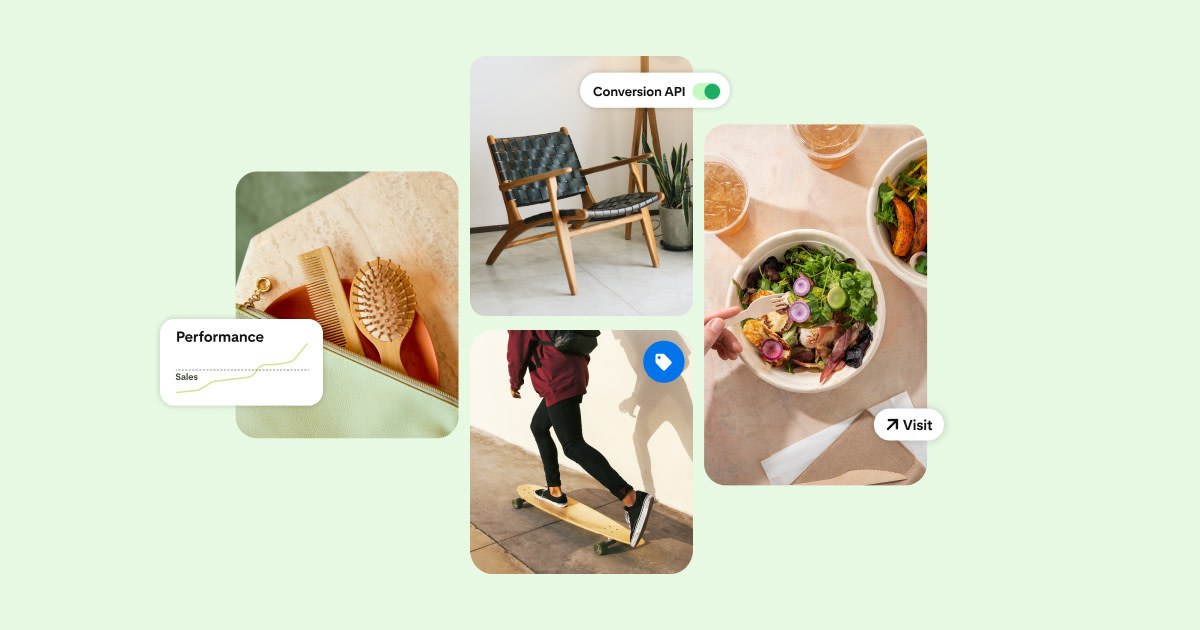
Creative should therefore show the outcome, not only the product. A sofa needs to show the room it creates. A garment needs to show the occasion it belongs to. A tool needs to demonstrate the problem it removes. Users save a future result, not just an object.
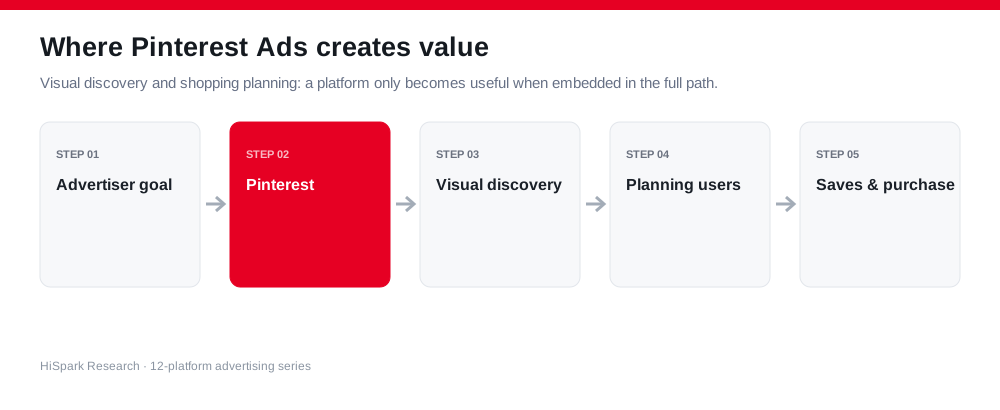
Pinterest often follows a path of discovery, save, comparison and return. It is rarely a straight line from impression to checkout.
02. Business model: where the money and strategic control sit
Pinterest monetizes a long discovery-to-planning journey. Users save content, giving brands a longer content life and a touchpoint closer to a future purchase. Visual content, product feeds and shopping ads combine to let advertisers enter a demand state before the final search or transaction.
03. Format-to-task mapping
| Format | Best task | Creative requirement |
|---|---|---|
| Image Ads | Inspiration, consideration and retargeting | A clear visual promise in the first image |
| Video Ads | Demonstration and usage scenarios | Understandable without sound |
| Idea Ads | Tutorials, lists and multi-step content | Organize several ideas into one useful plan |
| Shopping Ads | Catalog and dynamic product selection | Feed quality, price and inventory consistency |
| Premiere Spotlight | Launches and peak-season reach | Strong brand creative plus a capable landing page |

04. Priority markets
Evaluate the United States, Canada, the United Kingdom, Germany, France and selected Western European markets first. Home, fashion, beauty, weddings, travel and seasonal shopping content are mature, and product-feed infrastructure is generally more complete. Latin America and Asia-Pacific can be a second tier, but check local content supply, payments and fulfillment before scaling.
05. Peak season begins long before Black Friday
Because Pinterest is a planning environment, seasonal campaigns need a longer runway. Home, travel, wedding and gift categories should establish ideas and saves weeks before a promotion. The better sequence is inspiration first, comparison and product ads second, and retargeting at the point of purchase.
| Stage | Content task | Primary observation |
|---|---|---|
| 8-12 weeks before | Trends, scenarios and checklists | Saves, outbound clicks and content lifespan |
| 4-8 weeks before | Comparison, tutorials and reviews | On-site behavior, add-to-cart and email signup |
| 2-4 weeks before | Offers, bundles and stock | ROAS, order value and return risk |
| After the event | Usage guides, replenishment and pairing | Repeat purchase and long-tail saves |

06. Pinterest versus Instagram, TikTok and Google Shopping
Instagram is stronger for social identity and immediate interaction. TikTok is stronger for entertainment and trend participation. Google Shopping captures explicit product searches. Pinterest sits between inspiration and planning, with a particular advantage in saved, reusable content and longer consideration windows.
07. When Pinterest fails
Weak visual differentiation, a mismatch between the Pin promise and the landing page, and an account with nothing but hard-sell ads will limit results. Price, stock, delivery coverage and policy information must be clear on the destination page. Health, weight-loss, finance and children's products require careful review of claims and local regulation.
08. Summary
- Pinterest is defined by planning-oriented shopping intent, not generic social browsing.
- Saves and return visits extend content life and change how performance should be judged.
- Home, fashion, beauty, travel and seasonal retail are especially natural categories.
- Creative must show the outcome the product creates, not only the product itself.