


Native advertising is often reduced to cheap traffic. Outbrain's core product is content discovery: presenting the next article or commercial message within a publisher's reading context. Quality depends heavily on the publisher network, placement and landing experience.
Outbrain is therefore not just a traffic wholesaler. It can serve as a discovery layer for content commerce, subscriptions, app installs, lead generation and brand storytelling. Businesses without a content path can generate clicks without creating demand.
1. How discovery creates value
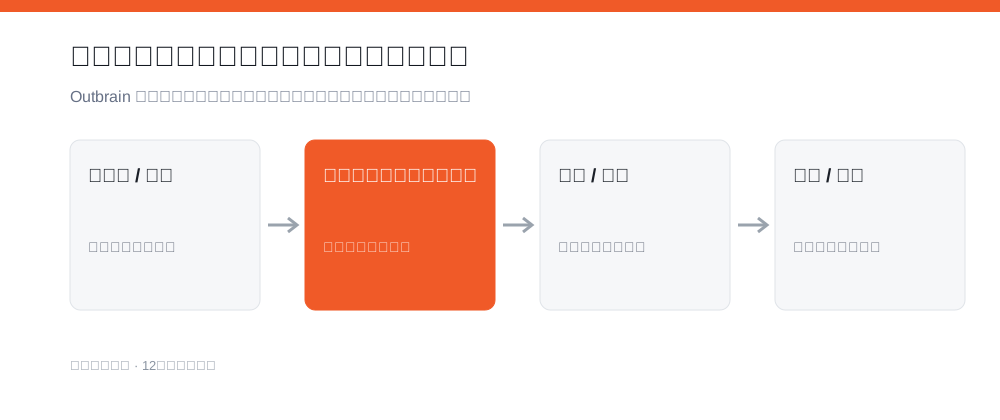
When users are already reading on a publisher site, attention remains active. Outbrain inserts the next article, product or app recommendation into that reading flow, giving brands a softer entry point than a hard display ad.
What the platform really sells is continuity of context: from article to article, from information to comparison and then to action. The longer that path, the more important creative, landing pages and measurement become.
2. Context is both the advantage and the limit
The advantage is native context, scalable interest discovery and mobile reading behaviour. Users do not need an explicit search query, so the network can help create demand and test content angles.
The limits are equally clear: publisher quality varies, feed placements can invite clickbait, and creative and headline compliance matter. Platform optimisation cannot solve everything; audience, content and landing pages remain decisive.
3. Four growth jobs that fit
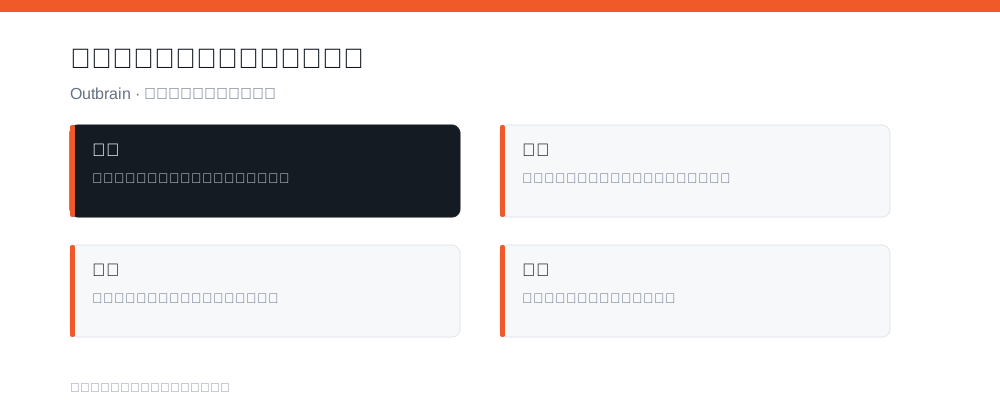
Content commerce uses stories, reviews, rankings and use cases to introduce products. Subscriptions use depth to reduce understanding costs. App installs use discovery to find new interest groups. Lead generation uses reports and industry content to qualify B2B demand.
The common thread is not category but education: the value needs to be understood before conversion. Where one hard-ad sentence cannot explain the offer, discovery can outperform direct response.
4. Do not judge the channel by CPC alone
Outbrain reporting can easily pull teams toward CPC and CTR. The real quality of native traffic shows in dwell time, scroll depth, return visits, sign-ups, add-to-cart and contribution margin. A low CPC may simply buy cheaper attention, not better demand.
Use stage-based metrics: impression to click for creative, click to landing for promise consistency, landing to conversion for experience, and conversion to repeat for user quality. Only then can teams tell whether media, content or product is the bottleneck.
5. Put it back into the value chain: five roles are not interchangeable
Outbrain belongs to Native & Content Discovery. A common mistake is to judge it with metrics owned by another role: demanding DSP-style ROAS from an SSP, or judging an ad server by network fill, produces distorted conclusions.
The better question is which core resource it controls, and whether that resource converts into a verifiable business outcome. For Content discovery and native performance, scale is not the only answer; transaction quality, data availability and governance matter equally.
Establish the business type and readiness conditions before discussing integration or optimisation. Applying one KPI across every role often turns an organisational issue into a false platform issue.
| Industry role | Core resource controlled | Question to validate |
|---|---|---|
| DSP / demand platform | Budget, audiences and optimisation goals | Can it buy the right audience at a controllable cost? |
| Commerce media | Product data, shopping intent and retail/offsite context | Do product, data and media create incrementality? |
| Native / discovery network THIS PLATFORM | Publisher context, content consumption and next-click attention | Can content turn clicks into valuable actions? |
| SSP / sell-side platform | Inventory, auction paths, signals and deal rules | Can it improve net yield while protecting experience? |
| Omnichannel ad platform | Identity, content context, DSP and multi-screen supply | Can it unify identity, frequency, creative and measurement? |
Quick fit check: who is ready and who should build foundations first
| Business type | Best-fit context | Readiness required | Avoid when |
|---|---|---|---|
| Content commerce | Strong reviews, stories, rankings and use cases | Content cadence and product landing paths | Buying low-quality clicks with exaggerated headlines |
| Subscription, tools and apps | The value needs explanation before action | Clear landing pages, events and retention tracking | Optimising installs without retention or payment |
| B2B leads | Reports, cases and industry insight can qualify demand | Content tiers, CRM feedback and lead-quality rules | Treating downloads as qualified opportunities |
Platform reference: Outbrain