





Quick decision: who should look closer, and who should wait
| Best fit | Required foundation | Avoid when |
|---|---|---|
| SaaS, enterprise services, industrial goods, finance | Role-based content connected to CRM and sales | Very low ticket or no sales follow-up |
| Recruitment, employer brand and professional services | A complete company page, proof and professional content | Broad reach with no qualification layer |
| High-value, multi-stakeholder purchases | MQL, SQL and opportunity value are tracked | CPL as the only success metric |
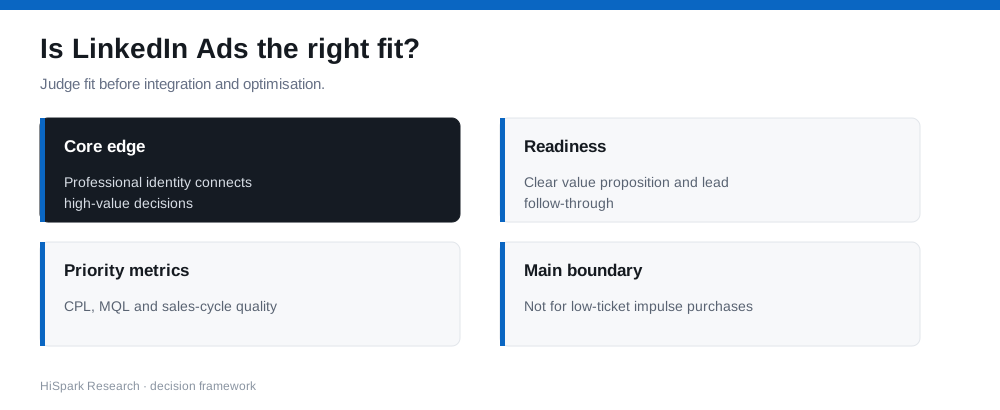
Check whether the business has the required foundation before discussing account setup, assets, data and budget. Specific decisions depend on category, account and market context.
Shenzhen HiSpark Ad Media Co., Ltd. supports Bidding, Waterfall and hybrid strategies, with multi-platform A/B testing, traffic bucketing, floor-price configuration and revenue reviews. The goal is to save implementation time, avoid integration pitfalls and improve test efficiency.
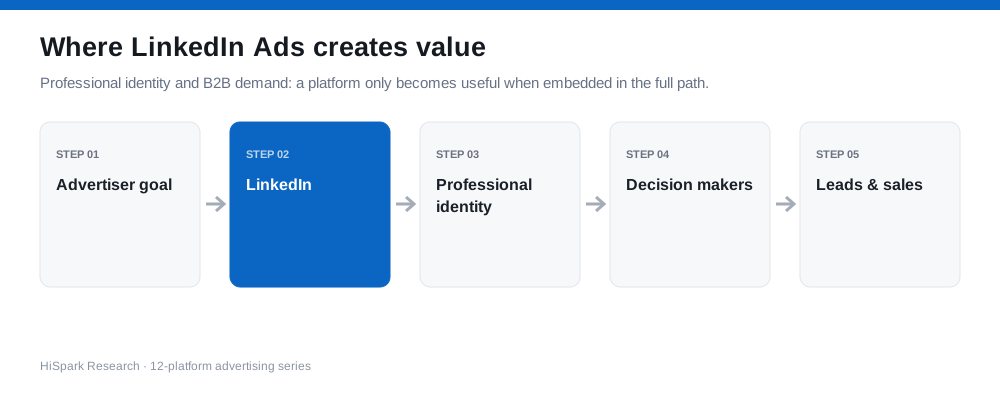
B2B advertising fails in two common ways. The campaign reaches many people, but very few are involved in the purchase. Or the lead form is easy to submit, yet sales discovers that the role, budget or timing is wrong. LinkedIn's value is that it turns professional identity and company attributes into targeting and reporting layers.
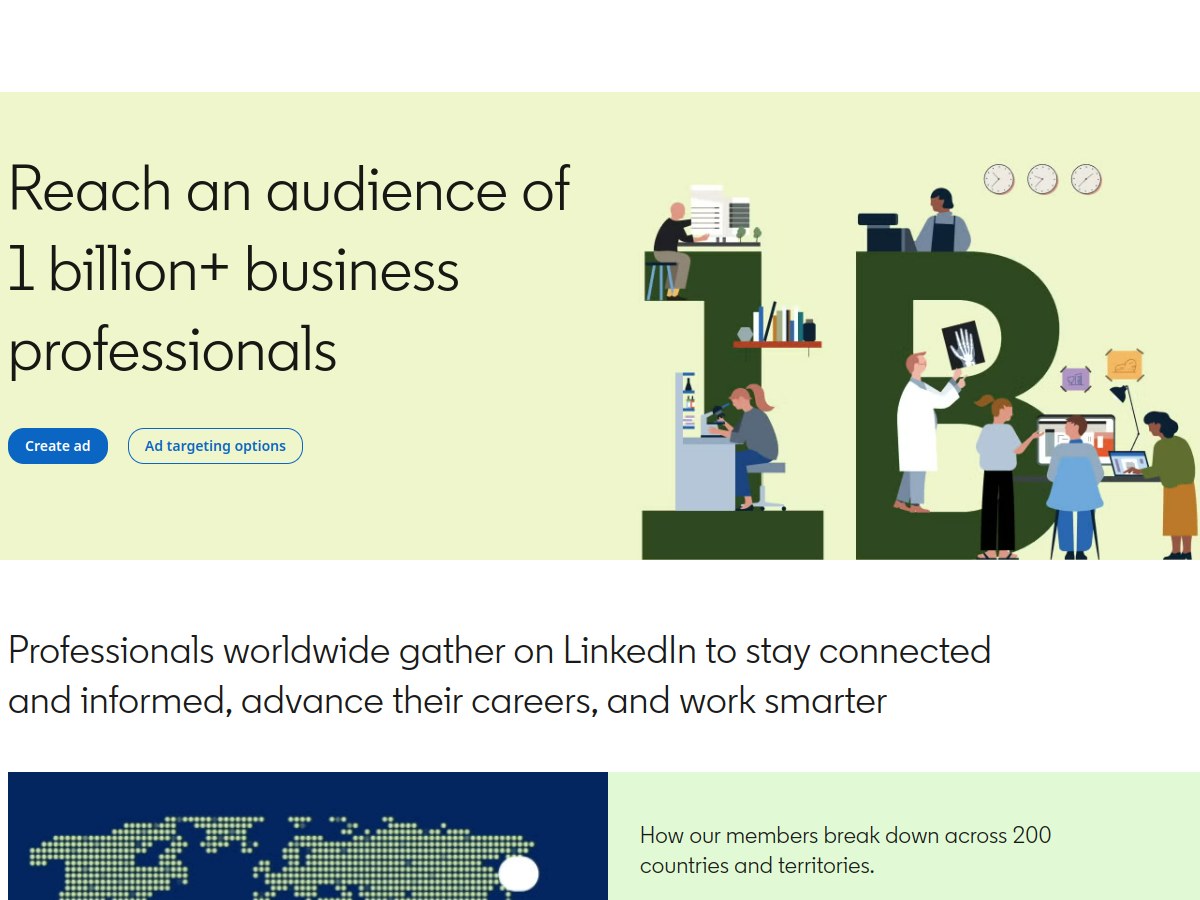
The official audience page currently describes more than one billion professionals and provides regional counts: approximately 277 million in Asia-Pacific, 257 million in Europe, 233 million in North America, 156 million in Latin America, and 60 million in the Middle East and Africa. This is not an English-only channel.
01. Target the buying structure, not a generic persona
LinkedIn supports targeting by job title, seniority, industry, company size, skills, location, education and company lists. Matched Audiences adds contact lists, company lists and retargeting. For high-value sales, these dimensions are closer to the actual buying structure than broad consumer interests.
A useful campaign is usually split by role, not narrowed by stacking every filter. Decision-makers, technical evaluators, everyday users and finance or procurement teams need different content. One whitepaper should not be sent to all four groups with the same promise.
| Role | What they care about | Useful destination |
|---|---|---|
| Business decision-maker | Growth, efficiency, risk and return | Case study, ROI model, industry report |
| Technical evaluator | Architecture, compatibility, security and integration | Technical documentation, demo or sandbox |
| Frontline user | Workflow, learning curve and collaboration | Short video, template or product tour |
| Finance and procurement | Cost structure, contract and compliance | Pricing framework, procurement checklist |
02. Business model: where the money and strategic control sit
LinkedIn connects professional identity, content consumption and company relationships. Advertising is one layer of monetization across that professional graph. Its value is the ability to reach people by role, seniority, company, industry and skill; the cost is narrower audiences, higher content expectations and the need to evaluate lead quality inside CRM.
03. Formats and lead handoff
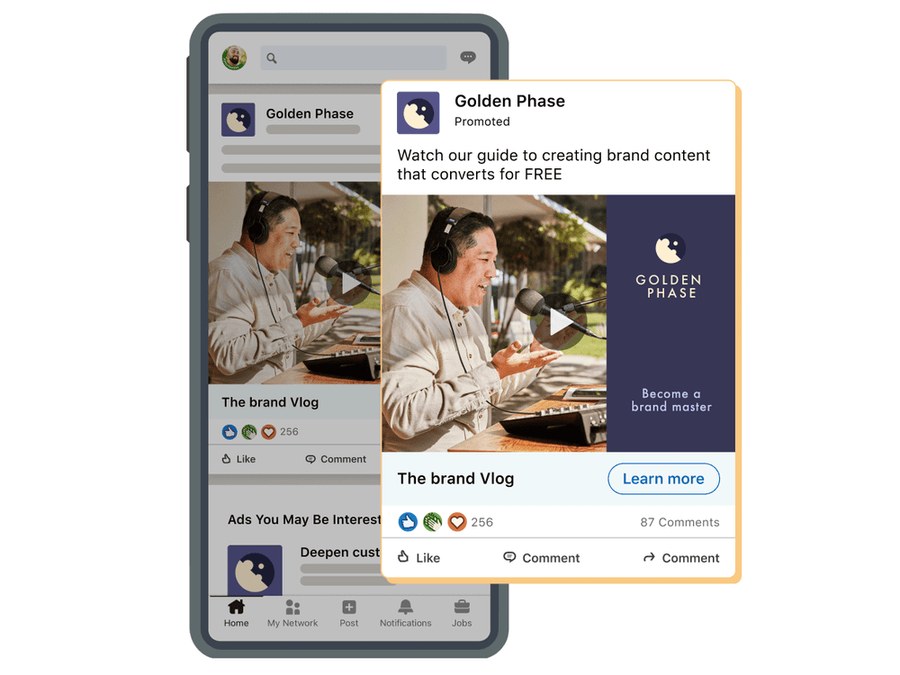
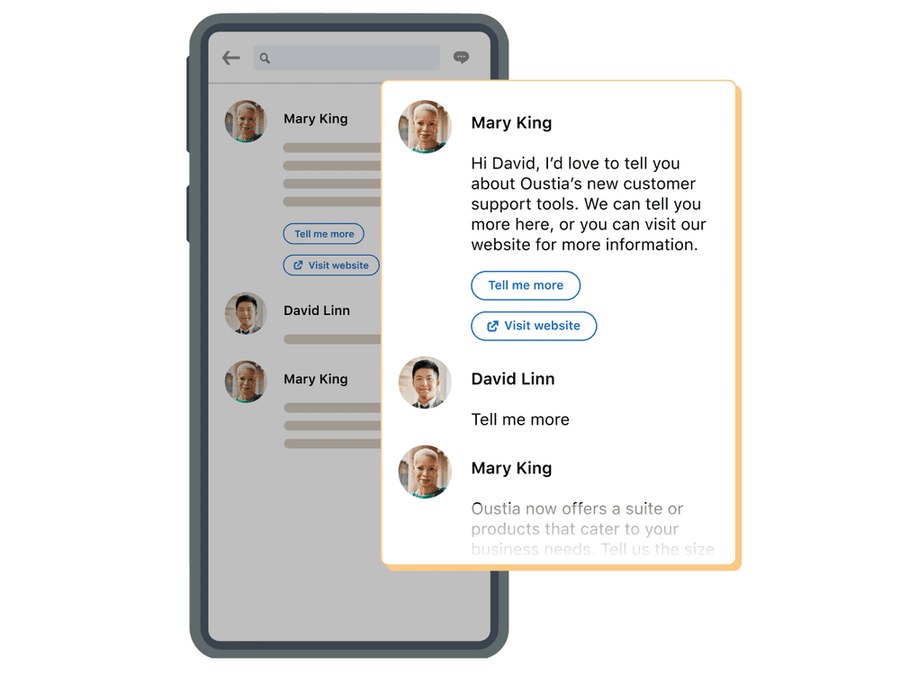
Core LinkedIn formats include Sponsored Content, Sponsored Messaging, Dynamic Ads, Text Ads and Lead Gen Forms. Sponsored Content builds professional trust, Messaging works with audiences that already have some awareness, Dynamic Ads can personalize by professional profile, and Text Ads offer a lower-production option.
Lead Gen Forms reduce friction because LinkedIn can populate profile data. But an easier form is not automatically a better lead. Connect platform leads to CRM stages, sales acceptance and closed revenue. Otherwise the system optimizes for more forms rather than more qualified opportunities.

04. Priority markets
For high-ticket B2B, validate North America, the United Kingdom, Germany, France, the Netherlands, the Nordics, Singapore and Australia first. North America and Europe have mature software, industrial, finance and professional-services ecosystems. Asia-Pacific offers scale, but language, industry structure and procurement differ sharply by country. Do not use one English asset for all of Europe, and do not assume every regional sales team can follow up in the same way.
05. How LinkedIn divides work with Google, Meta and Reddit
| Channel | Primary role | Better B2B stage |
|---|---|---|
| Build reach and leads through professional identity | Account identification, education and sales enablement | |
| Google Search | Capture active search demand | Category and problem research with explicit intent |
| Meta | Expand reach and retargeting | Market education, content distribution and events |
| Enter specialist communities | Technical validation, peer proof and complex explanation |
06. The most common B2B lead leaks
Too many filters can starve the learning phase, while broad targeting can produce leads sales will not accept. Form promises may not match the sales conversation. Teams often optimize only for CPL instead of MQLs, SQLs or revenue. Evaluate LinkedIn by qualified opportunity cost, sales cycle and deal value, not only by the price of a form submission.
07. Summary
- LinkedIn's asset is professional identity and company relationships, not broad interest data.
- B2B content should be split by buying role instead of sending one whitepaper to everyone.
- North America and Europe suit high-value sales, while Asia-Pacific offers scale but requires country-level segmentation.
- Lead quality, sales acceptance and opportunity value explain return better than form-fill cost alone.