
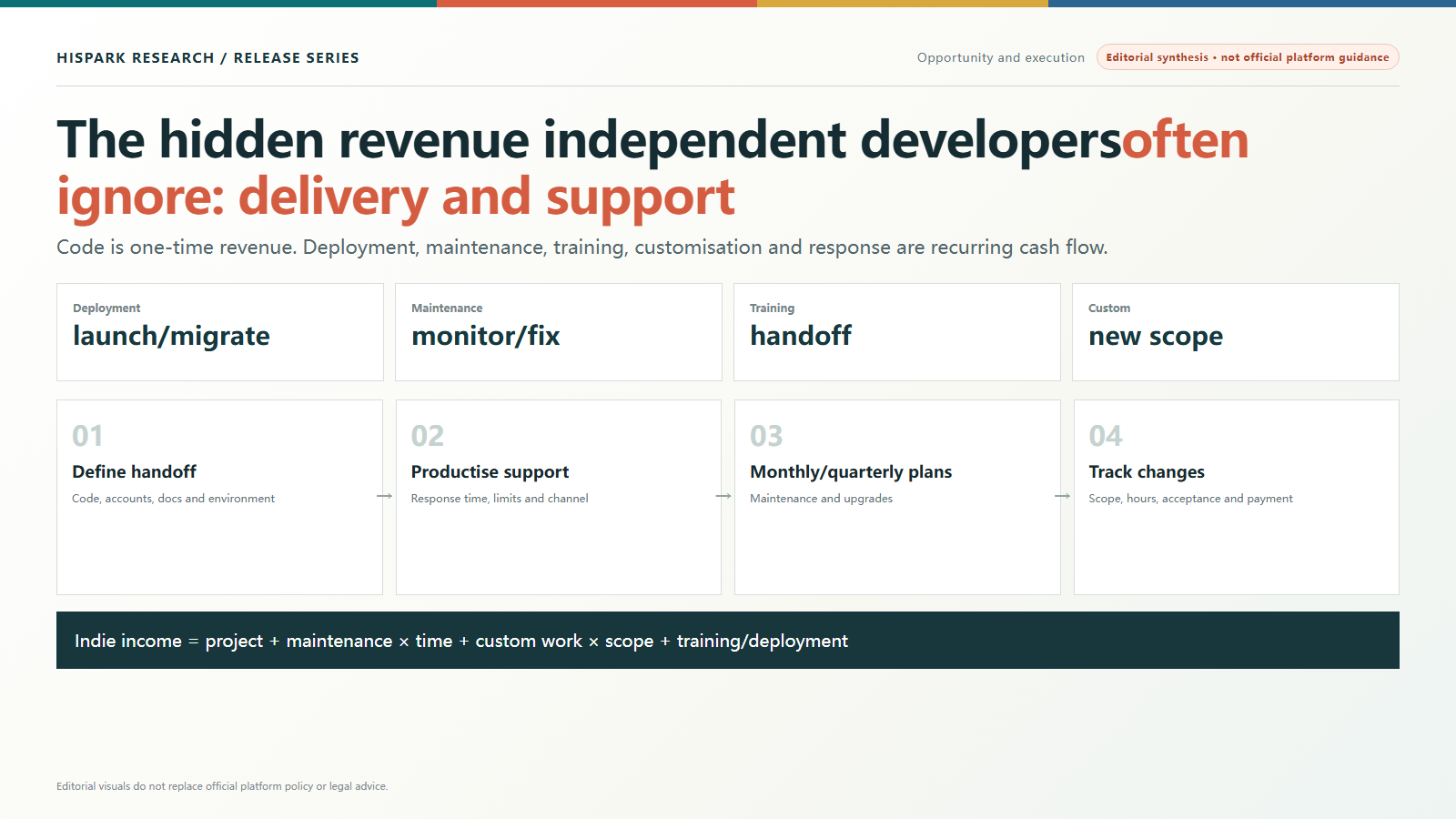
Code is one-time revenue. Deployment, maintenance, training, customisation and response are recurring cash flow.
Code is one-time revenue. Deployment, maintenance, training, customisation and response are recurring cash flow.
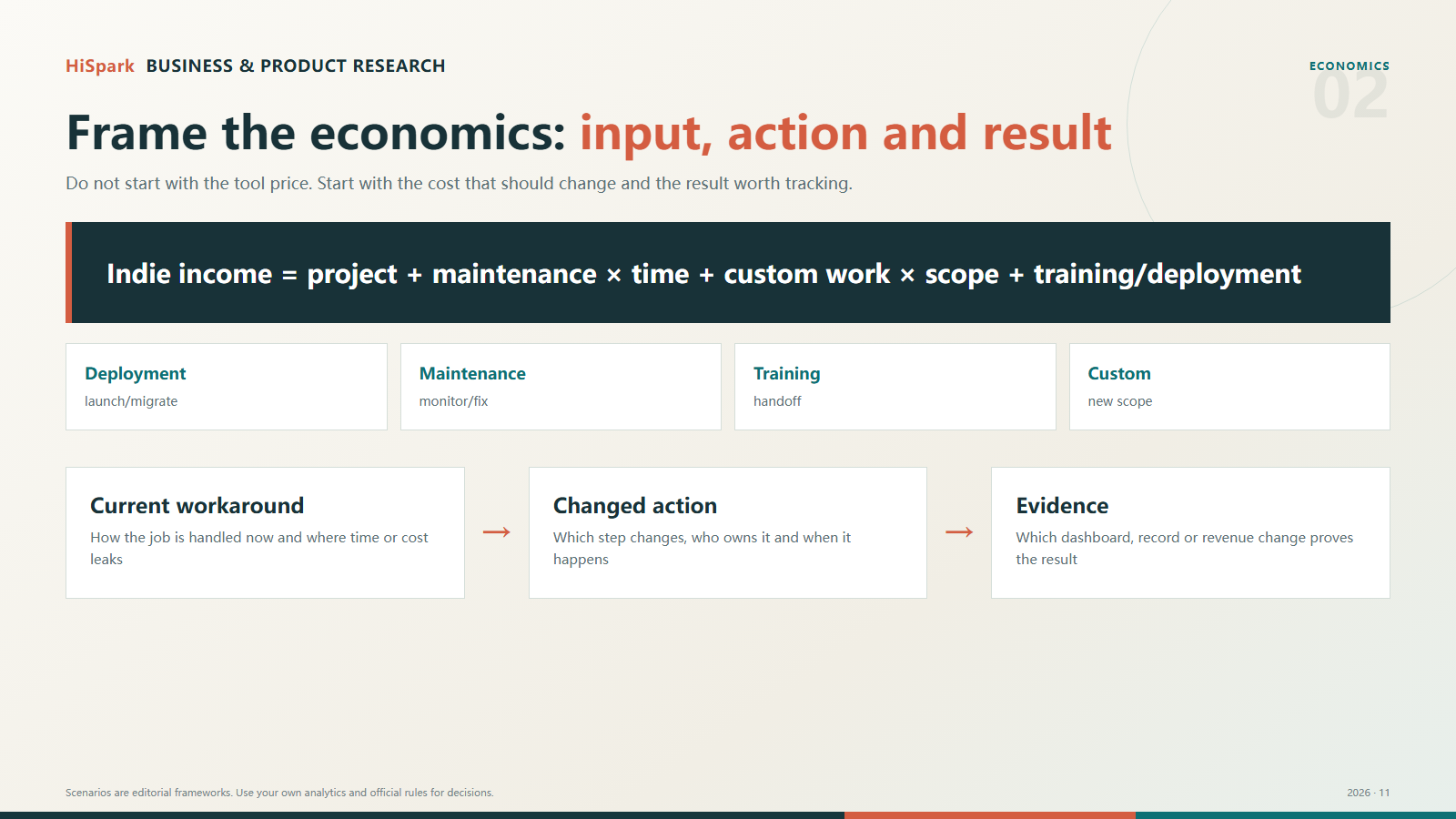
Start with the formula: Indie income = project + maintenance × time + custom work × scope + training/deployment
This article turns the issue into four execution steps and six checks that teams can apply directly to their product, website or advertising dashboard.
The real scenario: the problem is a chain
After source-code handoff, the customer immediately faces domains, certificates, payment callbacks, notifications, backups, access control and upgrades. If all of this is treated as a favour, support becomes unbounded and the customer still lacks a reliable response path.
A low one-time quote is easy to sell because long-term responsibility is hidden inside free support. A sustainable model separates deployment, maintenance, training, hosting and customisation into explicit services.
Split delivery into launch, stable operation and continuous improvement. Define scope, response time, included hours, extra fees and exit terms for each stage.
Four dimensions to inspect first
| Dimension | What to inspect |
|---|---|
| Deployment | launch/migrate |
| Maintenance | monitor/fix |
| Training | handoff |
| Custom | new scope |
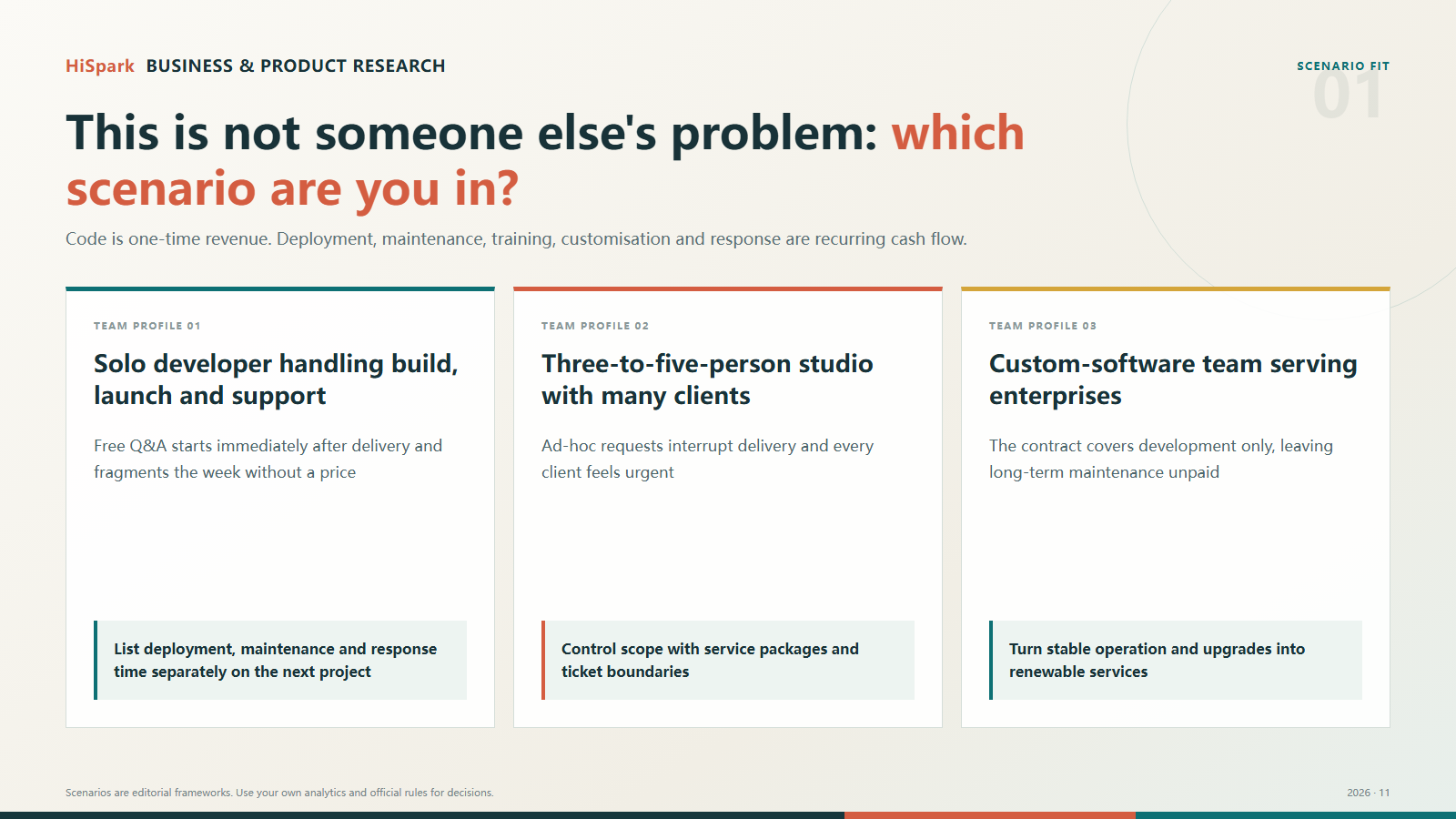
Do any of these situations match your team?
Free Q&A starts immediately after delivery and fragments the week without a price
List deployment, maintenance and response time separately on the next project
Ad-hoc requests interrupt delivery and every client feels urgent
Control scope with service packages and ticket boundaries
The contract covers development only, leaving long-term maintenance unpaid
Turn stable operation and upgrades into renewable services
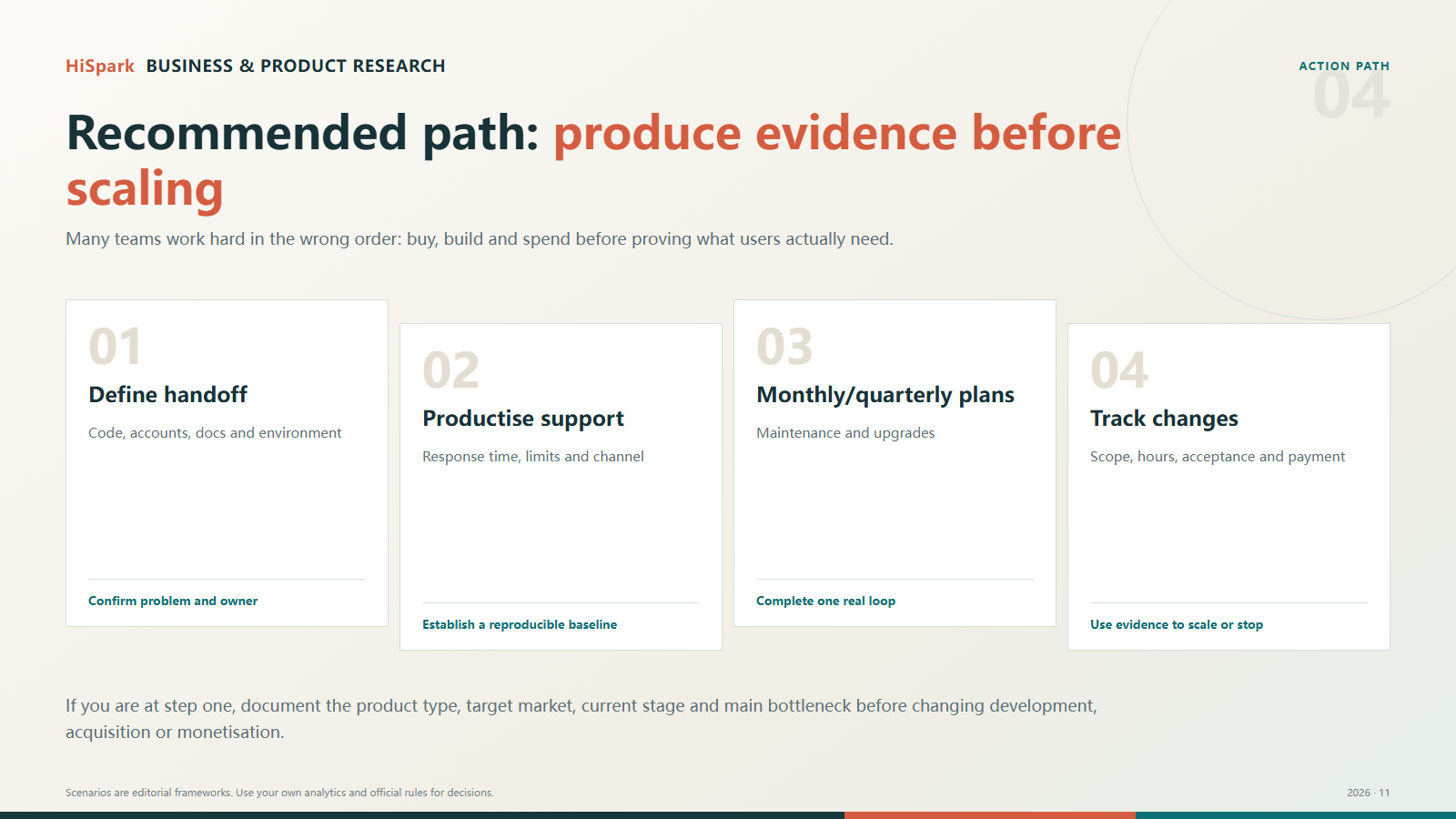
1. Four execution steps
| Step | Action |
|---|---|
| Define handoff | Code, accounts, docs and environment |
| Productise support | Response time, limits and channel |
| Monthly/quarterly plans | Maintenance and upgrades |
| Track changes | Scope, hours, acceptance and payment |
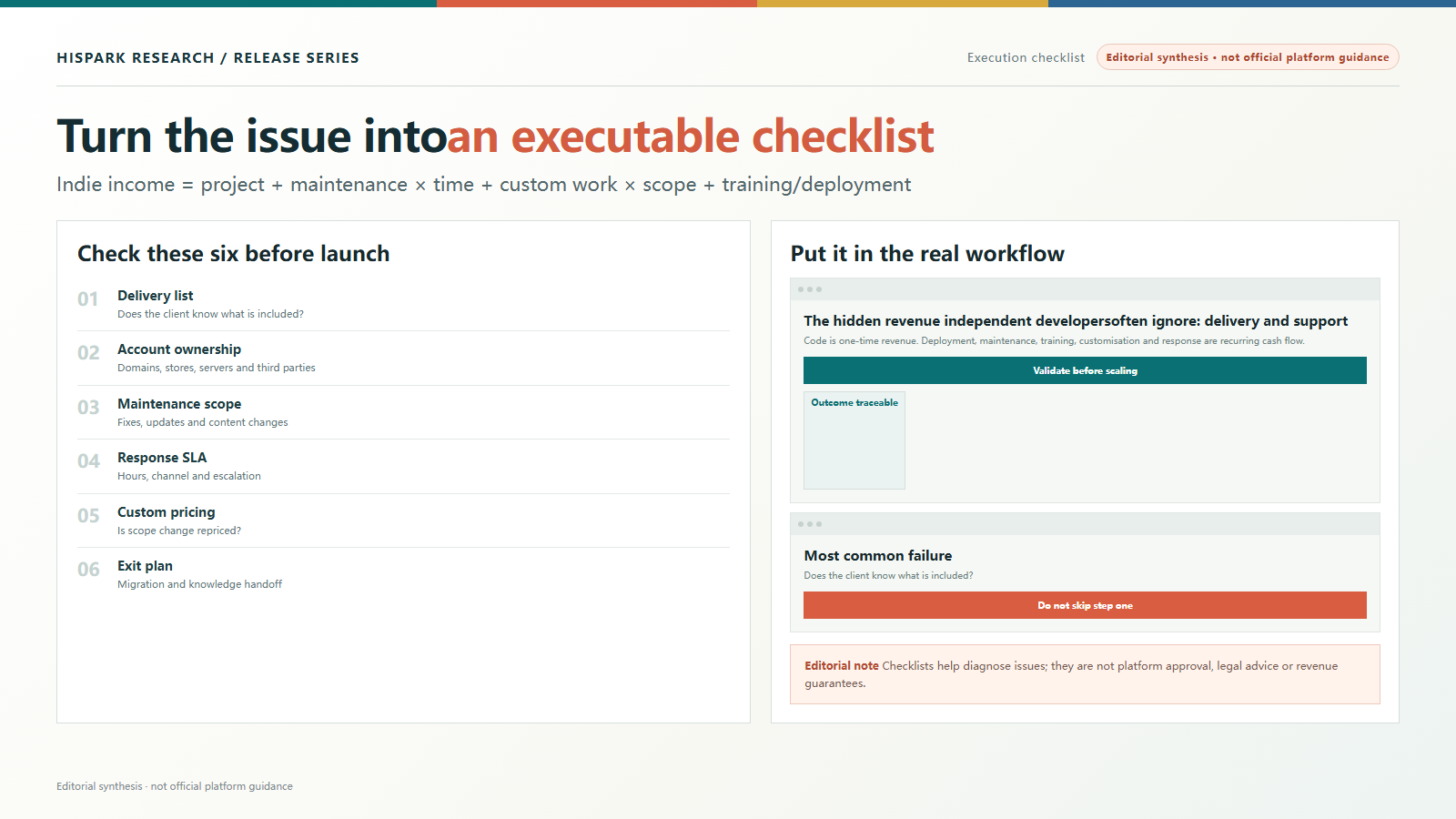
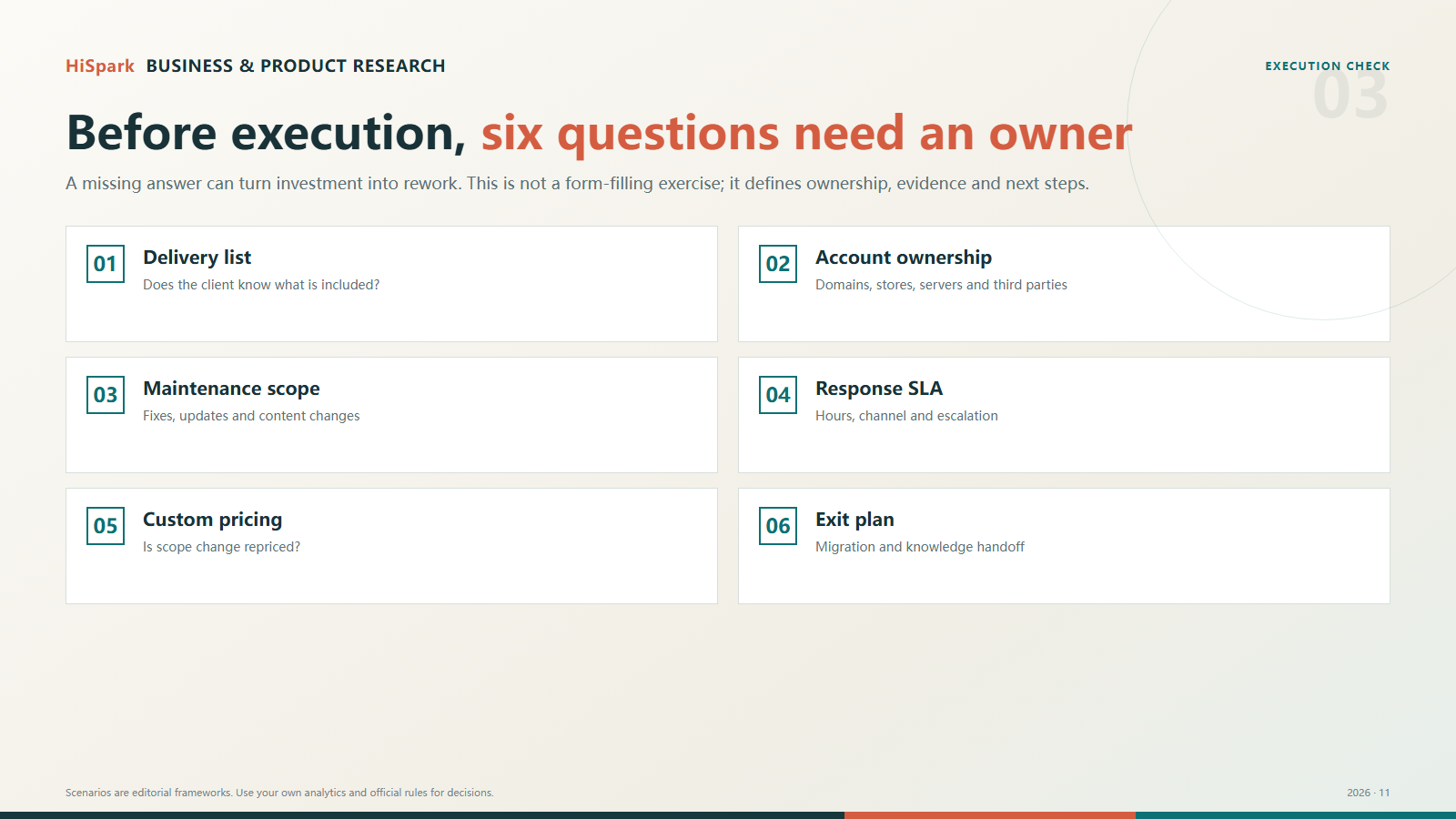
2. Six execution checks
Does the client know what is included?
Domains, stores, servers and third parties
Fixes, updates and content changes
Hours, channel and escalation
Is scope change repriced?
Migration and knowledge handoff
3. Four common mistakes
Looking at one aggregate metric
Treating one case as a benchmark
Changing several variables at once
Never validating the real user path
4. Quick motion overview
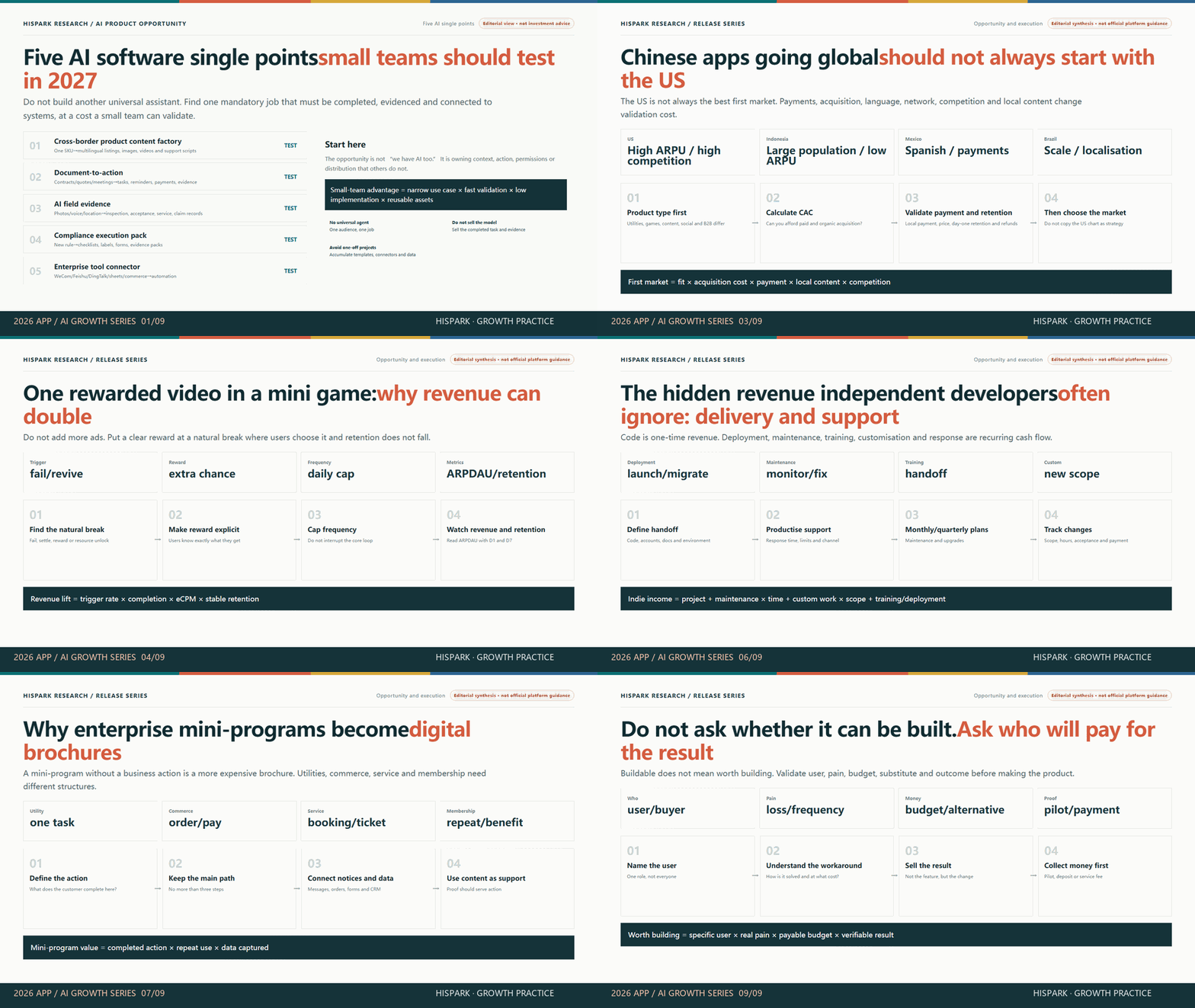
Series overview
A short visual overview of the nine scheduled growth and product articles. The article below contains the full analysis.
5. Frequently asked questions
What is the core test?
Indie income = project + maintenance × time + custom work × scope + training/deployment
What should we check first?
Does the client know what is included?
What is most often missed?
Hours, channel and escalation
Which teams are most likely to face this?
Solo developer handling build, launch and support, Three-to-five-person studio with many clients, Custom-software team serving enterprises
What should a small budget validate first?
Choose one team scenario and one observable result. Spend a week establishing a baseline instead of changing product, acquisition, payments and content at the same time.
When should the team pause?
Pause when no one owns the outcome, reporting definitions cannot be aligned, or repeated tests show no change in core user behaviour.
What counts as a valid result?
A valid result is not a temporary dashboard spike. It is a repeatable change in the key action, cost and retention that the same evidence can explain.
When do we need specialist help?
When the issue spans systems, payments, privacy, permissions or multiple platforms and internal data cannot isolate the cause.
Official references
Follow HiSpark for practical growth analysis
If you are building an app, website or software product, send your product type, target market, current stage and main problem. We will identify the bottleneck before recommending development, acquisition or monetisation changes.
info@hi-spark.com